
Ultratrails in Lille

Lille, Flanders between two borders
Capital of French Flanders, Lille combines Flemish facades with a giant braderie every year. At the gates of Belgium, the city is mostly flat, but the nearby Monts des Flandres offer real terrain for ultra-trail running.
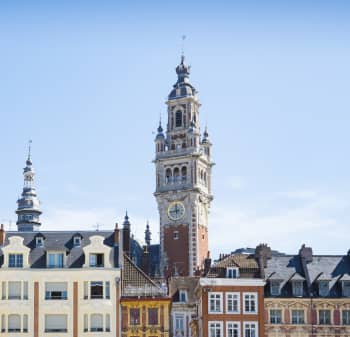
The Vieux-Lille lines up its brick facades and Flemish gables around the Grand-Place, which comes alive every year with the braderie, the largest flea market in Europe 🍟. A stone's throw from Belgium, the city cultivates a resolutely cross-border identity, somewhere between hoppy beer and mussels and fries.
The local terrain remains generally flat, typical of the Flemish plains, but the Monts de Flandre to the east offer hills that are surprising for the region, barely peaking above 150 m but enough to break up your stride. The degraded oceanic climate, cool and rainy for much of the year, remains suitable for training in every season, even though the north wind can sometimes catch you off guard on open ground.
The Trail des Pyramides Noires explores the slag heaps of the neighboring mining basin, a unique landscape listed by UNESCO ⛏️. The Nord Trail Monts de Flandres climbs those famous border hills, while Le Trail des Hobbits and La Passe Pierre, further along the coast, round out an **ultra-trail calendar** that proves the North doesn't need mountains to offer elevation gain, as long as you're willing to look a bit further than the city center.
The slag heaps, former mining waste turned into local summits, tell the story of a region that has managed to transform its industrial past into proudly embraced heritage. Between two runs, a break in an estaminet for a Flemish carbonnade remains a local classic. An **ultra-trail in Lille** lets you run on unexpected terrain, between coal-black slag heaps and green hills, on land shaped by generations of miners and brewers 🍺.
 See all races
Calendar of Ultratrails in Lille and its surroundings
Other places are waiting for you


This could also be of interest to you
A next-gen platform helping sports enthusiasts of all levels discover territories and heritage through races tailored to them.
Made in France, between Lyon and Nantes