
Kadiouk Trail Casamanca 2026
- Next event : Sun, Nov 29 ➜ Sun, Dec 6, 2026Date confirmed
- Last event : 8 Sat ➜ November 16, 2025
The event in a few words
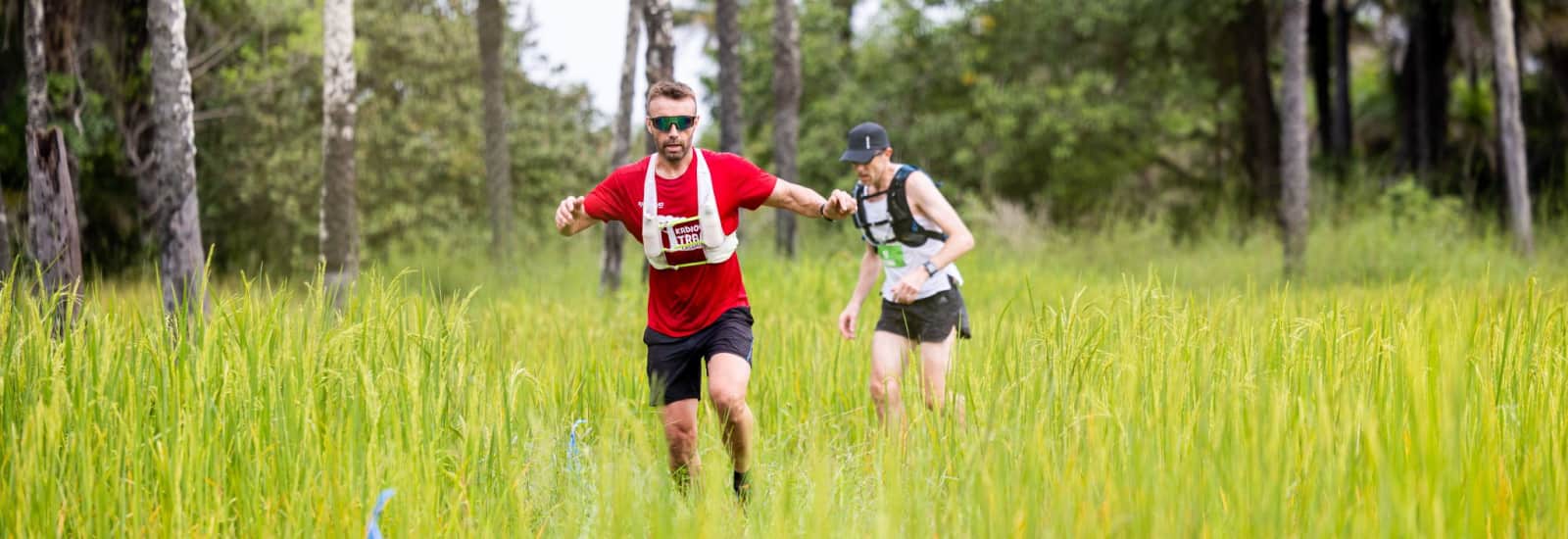
Imagine running a certain distance each day in trail running, then discovering the local culture. Combining both is possible! 🥳 8 days of travel, including 6 days of racing—does that tempt you? 🤔
Today, we’re offering you this format in the beautiful country of Senegal 🇸🇳. Head south for the Kadiouk Trail Casamanca 🏃. If you don’t know what to do in late November and early December, we’re always here to inspire you! 💡 Suffice to say, even at that time of year, it’s hot over there 🥵. So pack SPF 50 to avoid getting roasted, your best sunglasses 🕶️, your favorite trail shoes, and set off on an adventure like no other ✈️.
The Kadiouk Trail Casamanca is the 8th little one in the Exaequo Voyages family. We’re talking about the organizers of Kimbia Kenya, the Cabo Verde Ribeira Trail or the Norway Fjord Trail (among others). After a quick stop in Dakar for the night 🌙, you’ll discover Ziguinchor and its palm trees 🌴, the regional capital, then the small village 🏘️ of Koubalang. That’s where your journey will truly begin. Two distances are available: a 50 km, with 10 km to cover each day for 5 days. For the more seasoned, a 100 km, i.e. 20 km per day. No time to mess around! 😜
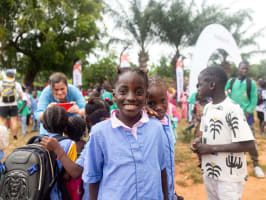
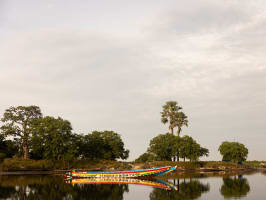
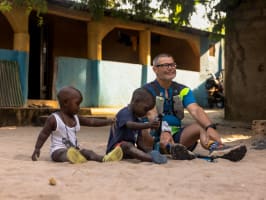
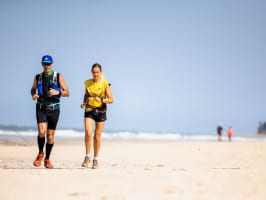
Stage 1 crosses bush areas before reaching the village of Agnack. On day two, you run among giant baobabs and rice fields as far as the eye can see 😎. The highlight is the finish on the banks of the Casamance River, a magnificent spot where you can sometimes catch sight of manatees if luck is on your side 🦭. Hang on for the third stage at Pointe Saint-George. The next day will have you discover the Island of Niomoune. It’s the wild heart of the raid, where you truly feel far from everything 🛖. Stage 5: Hitou. This is the “end of the world” stage. After a pirogue transfer 🚣, you set off on a unique course after immersing yourself in this village with animist traditions 🌱. You’ll then head to Cachouane, where you’ll rest your eyelids 👁️. From the calm of Cachouane, you go by tuk-tuk to the buzz of Djembering for the 6th and final stage. The end of the route takes place on the immense beach of Cap Skirring 🏝️. During your run, take the time to open your eyes 👀 and enjoy the postcard landscapes this beautiful country has to offer 🎁. You’ll pass along rice fields, beaches, mangroves, baobabs and “fromagers”. Quick clarification ⚠️: don’t expect to find a camembert 🧀 in the middle of nowhere… The fromager is a giant tree 🌳 that can reach 40 m high! On the other hand, you won’t be alone: expect an audience. Children from the villages will surely come cheer you on. A real running star 😎.
The Casamance region is full of unique ecosystems and peoples with legends and stories 📖 more captivating than the next. You’ll meet the locals, discover their culture and traditions, and share unforgettable moments with them. We guarantee it! 👌 But that’s not all: local populations are often victims of inequalities (economic, educational, climatic, migratory). Behind your race lies a real solidarity project ✊. By taking part in this trip 🧳, you directly support the actions of the Futur au Présent association, which supports these communities. The people you’ll meet are those who will benefit from these social programs. You’re running for a good cause, and that’s priceless 💫.
So, are you in for the adventure? 🗺️
4 reasons to join this race
A distance for every taste
120 kmTOP
60 km
- Sun, Nov 29 ➜ Sun, Dec 6, 2026
- Elevation gain : 414mD+
- 120 km
A few more words
Monday 30 November 2026, Stage 1:
First AGNACK race stage: 20 km & 162 mD+
Crossing villages and tropical forest, finishing in the village of Agnack.
Tuesday 1 December 2026, Stage 2:
Second AFFINIAM race stage: 20 km & 70 mD+
Wednesday 2 December 2026, Stage 3:
Third POINTE SAINT GEORGES race stage: 20 km & 34 mD+
Race among baobabs, kapok trees and rice fields, finishing on the banks of the Casamance River
Thursday 3 December 2026, Stage 4:
Fourth ILE DE NIOMOUNE race stage: 19.5 km & 45 mD+
Race on the island between villages and rice fields
Friday 4 December 2026, Stage 5:
Fifth HITOU race stage: 20 km & 80 mD+
“At the end of the world”, accessible only by pirogue
Saturday 5 December 2026, Stage 6:
Transport by tuk-tuk to the “Djembering” stage: 16 km & 25 mD+
Between villages, then arrival at the ocean and a long stretch along the beach
Sunday 6 December 2026: Return to France
- Sun, Nov 29 ➜ Sun, Dec 6, 2026
- Elevation gain : 220mD+
- 60 km
A few more words
Monday 30 November 2026, Stage 1:
First AGNACK race stage: 10 km & 81 mD+
Crossing villages and tropical forest, finishing in the village of Agnack.
Tuesday 1 December 2026, Stage 2:
Second AFFINIAM race stage : 11 km & 50 mD+
Wednesday 2 December 2026, Stage 3:
Third POINTE SAINT GEORGES race stage: 11.3 km & 14 mD+
Race among baobabs, kapok trees and rice fields, finishing on the banks of the Casamance River
Thursday 3 December 2026, Stage 4:
Fourth ILE DE NIOMOUNE race stage: 11 km & 25 mD+
Race on the island between villages and rice fields
Friday 4 December 2026, Stage 5:
Fifth HITOU race stage
Transport by pirogue to the stage, then 11 km & 40 mD+
“At the end of the world”, accessible only by pirogue
Saturday 5 December 2026, Stage 6:
Transport by tuk-tuk to the “Djembering” stage: 8 km & 10 mD+
Between villages, then arrival at the ocean and a long stretch along the beach
Sunday 6 December 2026: Return to France
Frequently asked questions (FAQ)
You’ll be able to pick up your bib on site during the week’s general briefing.
Day 1 – Sunday, November 29, 2026 – Welcome & immersion in Casamance
04:30 – Meet-up at Paris Orly Airport
07:00 – Non-stop Transavia flight
12:20 – Arrival in Cap Skirring
Bus transfer to Ziguinchor
Afternoon: acclimatization and discovering the city
Dinner & week briefing in a typical local venue
Night at Hôtel Perroquet – Ziguinchor
Day 2 – Monday, November 30 – Stage 1 – Running & community sharing:
First race stage, AGNACK: 10 or 20 km – Through villages and tropical forest, finishing in the village of Agnack
Lunch and visit to Ziguinchor’s traditional market
Solidarity afternoon: visit the Futur Au Présent association and meet the girls and volunteers at the community hub
Dinner at the association
Night at Hôtel Perroquet – Ziguinchor
Day 3 – Tuesday, December 1 – Stage 2 – Between culture and bolongs:
Second race stage, AFFINIAM: 10 or 20 km – An outback island stage with a memorable finish in Djilapao.
Lunch and visit to Ziguinchor’s traditional market
Dinner at the hotel
Night at Hôtel Perroquet – Ziguinchor
Day 4 – Wednesday, December 2 – Stage 3 – Between culture and bolongs
Third race stage, POINTE SAINT GEORGES: 10 or 20 km – Run among baobabs, kapok trees and rice paddies, finishing on the banks of the Casamance River
Rest and lunch by the Casamance River at Pointe Saint Georges
Settle into the camp / meet the locals & climb a baobab
Dinner and overnight at the Pointe Saint Georges camps
Day 5 – Thursday, December 3 – Stage 4 – Immersion on Niomoune Island
Pirogue transfer to Niomoune Island
Fourth race stage, NIOMOUNE ISLAND: 10 or 20 km
Running on the island between villages and rice fieldsLunch at Alouga camp
Afternoon: explore the island at the pace of local lifeDinner and overnight at Alouga’s eco-friendly nature camp
Day 6 – Friday, December 4 – Stage 5 – Between Traditions and Legends
Pirogue transfer to the stage start
Fifth race stage “HITOU”: 10 or 20 km – A one-of-a-kind “end of the world” route, accessible only by pirogue
Lunch and discovery of the village of Hitou and its animist traditions
Pirogue transfer to Cachouane
Festive dinner with live music at Auberge Sounka
Overnight in Cachouane
Day 7 – Saturday, December 5 – Stage 6 – From the calm of Cachouane to the buzz of Djembering & Cap Skirring
Tuk-tuk transfer to the stage
Sixth race stage “Djembering”: 10 or 20 km – Run between villages, then reach the ocean and enjoy a long stretch along the beach
Lunch at the hotel
Afternoon: rest, relax / free time to explore Cap Skirring
Festive evening in Cap Skirring
Night at the hotel – Cap Skirring
Day 8 – Sunday, December 6:
Return to France
Breakfast at the hotel
Transfer to the airport (15 min)
13:30 – Flight Cap Skirring → Paris Orly
22:00 – Arrival at Paris Orly (non-stop Transavia flight)
Yes—here’s what you must have:
Hydration pack / bottle belt with at least 1L of water for each stage
1 whistle
Enough nutrition for the stages (gels, fruit bars/fruit paste, etc.)
Items for the solidarity project – more info coming soon
Passport
Here’s the list of gear recommended by the organizers to bring with you:
Running kit (at least 2 or 3 outfits: T-shirt, shorts, socks, trail running shoes)
Change of clothes for afternoons and evenings (shorts, pants, T-shirt, light jacket, sweater or warmer jacket, flip-flops/slides, shoes)
Toiletries
A small bag for post-race change of clothes (tote bag or small backpack)
Basic wash kit to freshen up after stages (small towel, wet wipes…)
Sunglasses / cap
Sunscreen
1 headlamp
Bath towel
Electronics: phone, camera, cables…
A power bank
A few clothespins
Earplugs
A small first-aid kit for minor issues (upset stomach, blisters, headaches). Even though medical support is available, bringing your own basics is strongly recommended.
Water and fruit (both dried and fresh) will be available at the finish line and, on some stages, at a mid-course aid station. Participants can also top up their running pack at the start of each race.
A single entry fee is set at €2,650 per runner. A €100 supplement per runner applies for those who want to stay in a room for the entire trip (maximum 26 spots). The standard accommodation plan is 5 nights in a room + 2 nights in a tent.
If you still have questions, you can contact the organizers by email: contact@exaequovoyages.com
No, there are no cut-off times.
Your entry includes:
Round-trip flights Paris/Cap Skirring
All transportation throughout the trip (bus, car, motorbike, pirogues)
Accommodation in hotels or camps, in twin or double rooms
Meals for the entire stay except one free lunch (last day). Drinks (including water) during meals are not included.
Race refreshments (water, fruit…)
Medical support during the race and throughout the trip
A bib number
A finisher medal for all participants
An event technical T-shirt for all participants
Technical supervision (main staff of around 6 people) for race operations, activities, and the solidarity program.
You can check the race rules here
Focus
A next-gen platform helping sports enthusiasts of all levels discover territories and heritage through races tailored to them.
Made in France, between Lyon and Nantes