How to choose your first marathon?
How to choose your first marathon?
Choosing your first marathon is a bit like choosing your first pair of shoes: make the wrong choice, and you’ll be limping at every kilometer. Elevation gain, weather, time limit, atmosphere: here’s how to find the perfect marathon for your debut.
Prioritize a flat course 🏃
A marathon is much more than a date on a calendar 🗓️. Behind the 42.195 km, every race has its own personality, and the first criterion to watch remains elevation gain ⛰️. A hilly route multiplies muscular fatigue and makes pace management over the long haul more complicated. For a first attempt, aim for a flat marathon: fewer surprises in the legs, more leeway to hold your target time all the way to the finish ⏱️.
Choose the right season
The weather matters just as much as the terrain. An autumn marathon in Northern Europe often helps you avoid the intense heat that drags down bodies not used to running in the sun ☀️. Check the average temperatures for race day before booking your bib 🌡️. The date also matters for another reason: it sets your training calendar. A solid training plan runs over 16 to 20 weeks; 📆 choose your race based on the time you have available to train, not the other way around.
Check the time limit ⏳
Every marathon imposes a time limit: a cutoff time to complete the 42.195 km, often between 5h30 and 7h. For a first marathon, it’s better to have a generous cutoff, so you can run without looking at your watch every kilometer ⌚. Also look at two other details before clicking "register": the price of the bib, which varies greatly from one race to another 💶, and access arrangements. Some races, like the Berlin Marathon, work via a lottery: it’s impossible to guarantee your spot, so plan ahead and sign up as soon as applications open 🎟️.
Bet on the atmosphere 📣
Finally, there’s the atmosphere along the course. Some races run through cities in celebration, with spectators on every street corner; others wind through the heart of nature, more intimate 🌲. Both have their charm, but the crowd changes everything as the kilometers tick by, especially after the 30th km 💪.
On the course, you’ll also come across pacers: experienced runners who hold a precise pace (3h30, 4h, 4h30…) to help you run steady 🎈. Spot them at the start, stick to their balloon, and let them manage the clock for you. Between two aid stations, they’re worth every GPS in the world 🧭.
4 ideal marathons to start with: Paris, Berlin, Amsterdam, Valencia
It’s impossible to talk about a first marathon without mentioning the Paris Marathon. The course runs alongside the Eiffel Tower, the Louvre and Notre-Dame: fatigue goes down easier with that kind of backdrop 😍, and the profile remains generally fast despite a few gentle inclines in the woods 🌳. If you’re looking for a different vibe, head to the Atlantic with the La Rochelle Marathon, flat and running along the ocean for a good portion of the route. Farther north, the Nantes Marathon crosses the city’s historic center and the Île de Nantes, between the Loire and old neighborhoods 🏰.
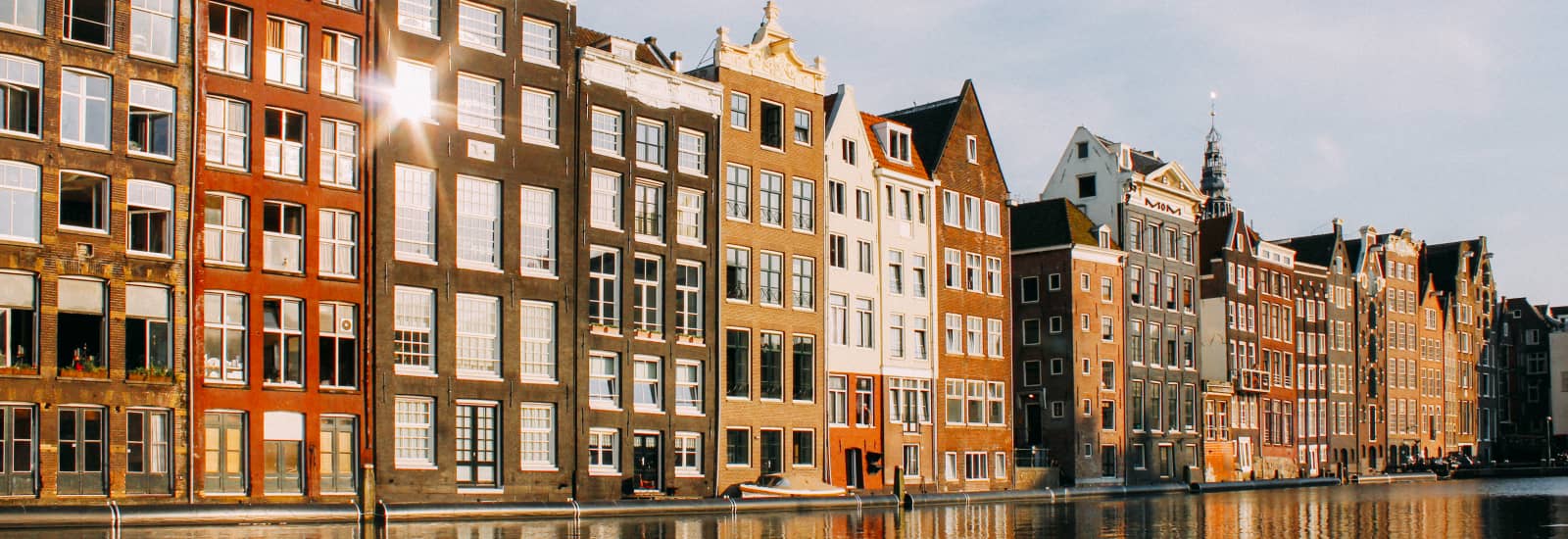
The Berlin Marathon has been a playground for world records for years 🏆. Eliud Kipchoge has posted several of his best times there on this route that passes through the Brandenburg Gate, but entry is via a lottery 🎲. The Amsterdam Marathon offers an equally flat profile, with a finish inside the city’s historic Olympic Stadium. The Valencia Marathon, in Spain, has built a reputation as a life-size athletics track: several contenders for the world record have come there to chase performance in recent seasons 🚀.
This could also be of interest to you

 Berlin

 Amsterdam

 Paris(75)

 Valencia


A next-gen platform helping sports enthusiasts of all levels discover territories and heritage through races tailored to them.
Made in France, between Lyon and Nantes