Seoul Marathon 2027
- Next event : Mid-March 2027
- Last event : Sun, March 15, 2026

The event in a few words
Behind its ultra-modern capital-city vibe, Seoul hides a secret few runners suspect: its flagship race already existed before World War II 🗓. The Seoul Marathon, also known by its historic name “Dong-A Marathon” as a nod to its founding newspaper. In March, it brings together more than 35,000 competitors over the classic 42.195 km, along with a more popular 10 km ☀️. Awarded Platinum Label by World Athletics, the event sits among Asia’s record-setting races on the calendar, alongside other events in South Korea 🇰🇷.
The story begins in 1931 with the Youngdungpo race, the direct ancestor of today’s event 🏯. Sprinter Sohn Kee-chung, winner in 1933, later takes Olympic gold in Berlin in 1936 under the Japanese flag, as Korea was still colonized at the time 📍. The newspaper Dong-A Ilbo censors the photo of the Japanese flag in its report; the colonial authorities suspend the race in retaliation 😶. World war then the Korean War force further interruptions, before a return as early as 1954. The event then moves far from the capital: first to Chuncheon in 1992, a city that now hosts its own marathon, then to Gyeongju from 1993 to 1999, before definitively returning to its original streets in 2000 📆. Hwang Young-cho, winner in 1991, would also take Olympic gold in Barcelona the following year 🥇—proof of the talent pool the race already represented at that time.
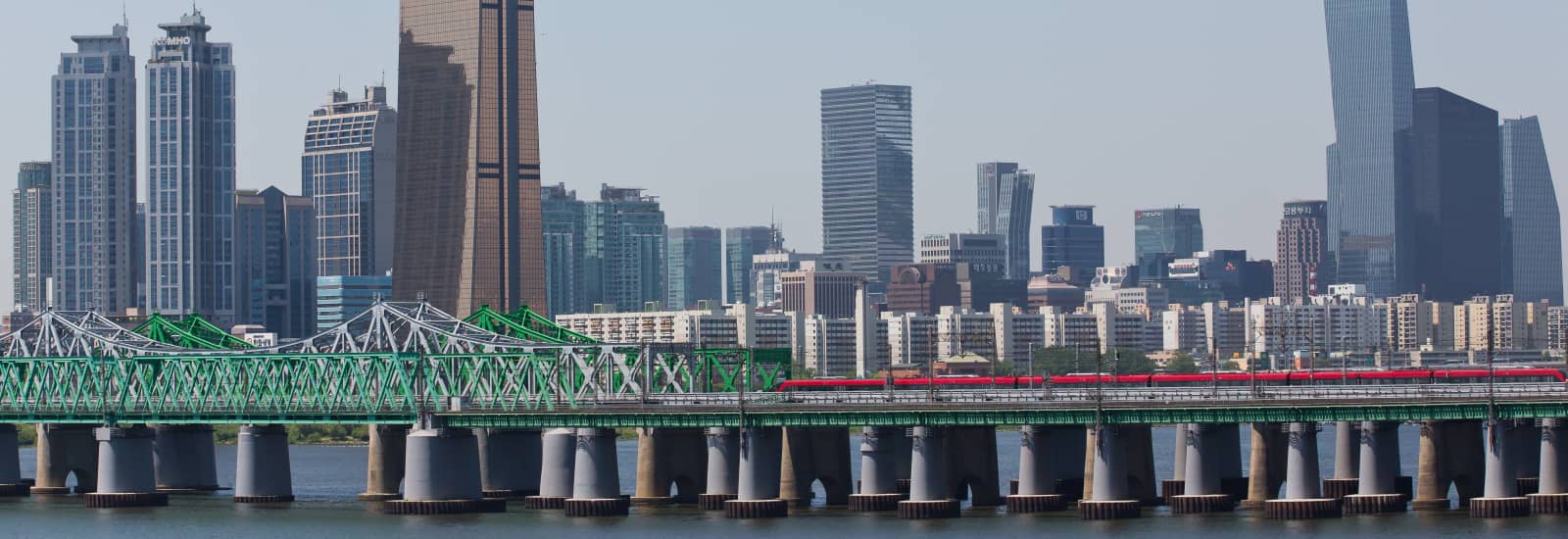
Now a mythical race, the course today starts from Gwanghwamun Plaza, watched over by the Gyeongbokgung Palace, passes the statue of Admiral Yi Sun-sin and then the Namdaemun Gate 🌸. The pack then crosses the linear park of Cheonggyecheon, a generally fast, flowing sequence along wide avenues all the way to the Dongdaemun district 🏙️. The only real difficulty on the course is the Jamsil Bridge, crossed between km 34 and km 35: a gentle climb, exposed wind above the Han River, and legs that are getting more and more tired 😬. The final stretch drops down toward Seoul’s Jamsil Olympic Stadium, stage of the 1988 Games, for a finish on the legendary track 🏟.
The Seoul Marathon also delivers on the stopwatch side ⏱️. The course record belongs to Ethiopian Haftu Teklu, who ran 2:04:23 in 2026 ahead of compatriot Getaneh Molla, beaten by a single second in the sprint ⚡️. On the women’s side, Romanian Joan Chelimo Melly has held the best mark since 2022 with 2:18:04. 10 of the 28 South Korean national marathon records were set here, clearly showing the event’s central role for the country’s athletics 📊. Foreign participation is also skyrocketing: 6,424 runners from abroad started in 2026, a 70% increase in just one year! 😮
Unlike the major marathons that operate by lottery, registration here is first come, first served! 🤠 But that’s not all: it is also supplemented by a performance certificate under 4:59 in the marathon to be eligible for a bib 🎫. The atmosphere remains packed and disciplined from start to finish: precisely timed aid stations, bananas handed out around km 30, a dense crowd lining the entire route—far ahead even of the field at the Seoul International Ultra Trail Running Race which brings the same city’s hills to life in trail mode.
After the effort comes the comfort of a trip to the traditional Bukchon district and its hanok houses, where the alleys provide a contrast to the flat asphalt swallowed up just hours earlier 🏘. A climb to N Seoul Tower then lets you admire the megacity from above and, from the heights, spot the route you ran that very morning 🌆. The neighboring district of Insadong, with its craft stalls and traditional tea houses, is perfect for a calmer break for tired legs. On the plate, the body mainly asks for comfort: a bowl of bibimbap, Korean BBQ grilled ribs, or a ginseng samgyetang soup serve as recovery as much as a reward 🍲.
Nearly a century old and still just as fast, the Seoul Marathon proves you can age without losing an ounce of speed. An indestructible “Soul,” quite literally 🏁.
A distance for every taste
MarathonTOP
10 km
- Mid-March 2027
- Elevation gain : 81mD+
- 42.195 km
Road Running 10 km
Road Running- Mid-March 2027
- 10 km
Hotels near the race
A next-gen platform helping sports enthusiasts of all levels discover territories and heritage through races tailored to them.
Made in France, between Lyon and Nantes