
Races in major cities

Upcoming races in major cities
 Nice(06)
 Toulouse(31)
 New York(NY)
 Geneva
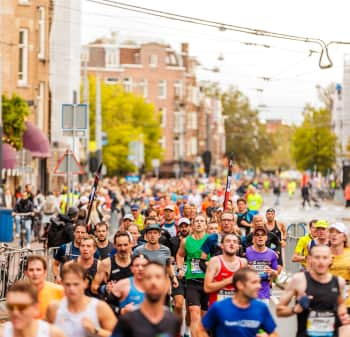
You never really cross a capital on foot 🚕, except on the day you pin on a bib. Then the subway shuts down, buses are rerouted, and you take over the asphalt, surrounded by tens of thousands of strangers running in the same direction 🏙. Skyscrapers, historic bridges, crowds going wild at intersections: here, the whole city becomes your playground, and every kilometer tells a piece of its story.
A race in a capital or major city is, above all, a question of scale 📏. Major thoroughfares closed to traffic for several kilometers, thousands of volunteers mobilized, logistics worthy of a state event: few sports disciplines bring together as many people as a big city marathon. The Paris Marathon illustrates this gigantism: founded in 1976, it now brings together more than 50,000 starters every spring 🏆.
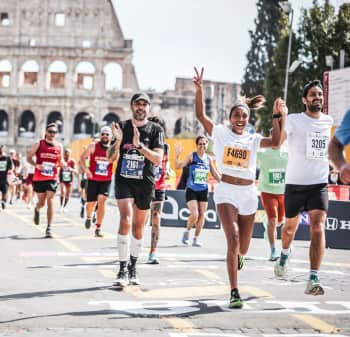
The difference with a trail race is obvious from kilometer zero 🫨. Here, the excitement comes from the crowd packed along the sidewalks, street bands at every intersection, locals leaning out of windows cheering you on as you pass 🎶. Staying focused despite constant distractions becomes a real mental challenge, right up to a finish line often drowned in confetti and cameras 📸.
This format comes with its own rules ⚠️. The asphalt, flat and fast, hammers the joints after the thirty-kilometer mark. Heat stored between buildings in summer, wind tunneling between two towers, slippery cobblestones in old historic centers: every capital hides its traps. In Tokyo, crushing humidity turns every stride into an ordeal, and in Chicago, dry cold calls for thermoses and extra layers from the very start corral ❄️.
The most famous monuments on the planet punctuate these routes 🗽. In London, the course runs along the Thames in front of Tower Bridge. In New York, the five boroughs lead all the way to Central Park 🍁. Each referenced city becomes a destination page in its own right, with its own running identity.
On French soil, the 20 km de Paris maps out a route between the Pont d'Iéna and the Eiffel Tower every October 🏃♀️. The Bordeaux Marathon winds through the UNESCO-listed historic center, while the Course des Lumières lights up the streets of Lyon, the country's second-largest city, every December 🎄.
The six World Marathon Majors concentrate most of the global fervor 🌟. The New York City Marathon remains the most-run marathon on the planet. An ultra-flat course gives the Chicago Marathon its reputation as a personal-best hunting ground. The oldest of the modern marathons, created in 1897, the Boston Marathon requires a qualifying time to enter, a rarity for this format 🎫. In Germany, the Berlin Marathon has seen most men's world records fall since the 2000s. Beach and the Sagrada Família frame the Barcelona Marathon 🇪🇸. Twenty-four districts roll by under the feet of runners at the Tokyo Marathon. Finally, ocean and Table Mountain set the scene for the Cape Town Marathon 🏔.
These crossings often offer a double reward: athletic and culinary 😎. Head to a terrace near the Invalides for a well-deserved coffee on the French side ☕, or a Shinjuku stall for a steaming bowl of ramen on the Japanese side 🍜.
Ready to trade trails for the asphalt of the world's biggest cities? On Finishers, choose the capital that suits you—between historic classics and upcoming urban discoveries, you'll definitely find what you're looking for! 🎁
 See all races
Plan your race in a major city
Where to run in a major city?















Other themes are waiting for you































A next-gen platform helping sports enthusiasts of all levels discover territories and heritage through races tailored to them.
Made in France, between Lyon and Nantes