
Snow races

Upcoming snow races

 Saint-Étienne-les-Orgues(04)
 Lyon(69)
 The Seasons(73)
 Font-Romeu-Odeillo-Via(66)
Looking for your next snow race? Find the complete calendar of winter races here to dive into the deep freeze.
Running on snow means agreeing to relearn everything: footing, pace, and reading the terrain. This discipline stands apart—necessarily more complex, but insanely beautiful 😍.
Let it snow let it snow let it snow ❄️
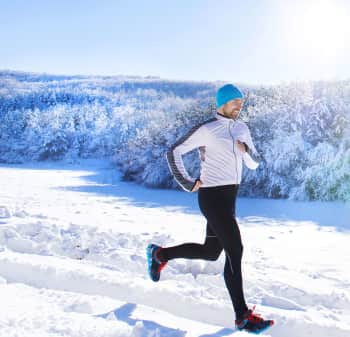
From the first snowflakes of November, you feel like sinking into the couch 🛋️. But you could take up a whole other activity: snow running 🌨️. This discipline promises you breathtaking scenery, but it has to be earned! 🫵 The ground becomes unpredictable: icy patches in the early morning, soft powder as soon as the sun hits, uneven snow cover...🥴 Every stride is negotiated, and that’s exactly what makes snow running so unique in a runner’s calendar ☝️.
Few runners really take it on, which gives the discipline a slightly underground feel 🤫. Each winter a good part of the French mountain ranges, from the Jura to the Pyrenees, are covered in snow ⛄️. But only a handful of organizers dare to mark out a running course there rather than a ski slope ⛷️. The result: you rarely run into people on the white trails, except at the now-legendary events that draw crowds despite the thermometer 🌡️. Snow absorbs sounds, muffles the atmosphere, and turns even a trail you’ve run a hundred times into unknown territory 🫣. The technical challenge pulls no punches: your stride shortens, your calves burn faster than usual, your ankles constantly compensate to stabilize your footing 🦵. On icy sections, the slightest lapse costs you dearly—straight into the mud or face-first in the snow 😂. Many runners wear studs or trail-appropriate spikes, others outright swap their shoes for snowshoes on the snowiest sections—a real return to the roots of snowshoeing, an ancestral practice of Nordic peoples 🇳🇴.
The cold sets its own rules: despite the lack of thirst, you need to keep an eye on your hydration—just because you’re not thirsty doesn’t mean you shouldn’t drink💧. Also, the wind at altitude can drop the perceived temperature by several degrees in just a few minutes 📉. Organizers, for their part, juggle the weather until the very last moment: a route can be modified the day before depending on how much fresh snow has fallen—an exercise in logistics that few disciplines experience 😬.
As for the scenery, it’s hard to beat 🤩. The Vercors, the Chartreuse or the heights of the Jura turn into playgrounds from the first falls 🥶. Further south, the Pyrenees let you run on snow while, most of the time, keeping a big blue sky above your head 🌞. The Vanoise massif, France’s first national park created in 1963, watches over the trails of Savoie where some winter races set up base📍. And in Font-Romeu, famous for its altitude training center frequented by generations of Olympic athletes, snow sits alongside the Catalan sun for almost the entire season 🇪🇸.
When it comes to races in France, the winter calendar offers plenty of choice 📆. Head to the Pyrénées-Orientales for the Romeufontaine Snow Trail, which winds around Font-Romeu-Odeillo-Via over several distances ✋. In the Alpes-de-Haute-Provence, the Ubaye Snow Trail Salomon climbs up to 2,250 m altitude at the foot of the Brec du Chambeyron, at the gateway to Italy, and is part of the famous Trails de Provence challenge 🤗. The Vercors Winter Trail maps out its 15 km on the Corrençon plateau, while the Inuit Trail invites runners to tackle 7.5 or 15 km in the heart of Pralognan-la-Vanoise 🐐. In the Jura, the O'xyrace Trail Blanc Jurassien offers in Prémanon a range of distances from the family format to a real challenge 💪. Further south, in the Rhône, the Trail d'Avenas lets you test your footing over 12 or 28 km without leaving the Lyon area 😎. Fans of icy night races gather for the Trail la Fée Blanche, 10 km to run with a headlamp strapped to your head 🔦. In the Hautes-Alpes, in Montgenèvre, the Snow Triathlon mixes trail, cross-country skiing and ski touring for a twist on the classic white trails 🤪. And it’s impossible to talk about winter racing without mentioning the Sainté-Lyon, 80 km at night between Saint-Étienne and Lyon, whose sometimes icy conditions on the Pilat ridgelines have made it a rite of passage 😨.
Internationally, the concept takes on a whole other dimension 😮. In Poland, the Gdynia Ultra Way - Winter Race offers up to 100 km on frozen trails around Gdynia, a Baltic port city. In Switzerland, the Winter Trail des Patrouilleurs has runners race 10 or 20 km in the heart of a calm, endless alpine landscape, on slopes that recall the heritage of the Swiss Alps patrollers ⬆. And for runners seeking the extreme, the Antarctic Ice Ultra takes place at the edge of the South Pole, over distances up to 100 miles, in one of the most hostile environments on the planet 🐾. After the effort, comfort takes on a very special flavor here. Fondue, mulled wine or tartiflette served at the finish line: mountain tradition systematically shows up on the aid-station lines of winter races—a direct nod to gratin dauphinois, tartiflettes and fondue 🫕.
Taking on a snow race means accepting to run differently: slower, more cautiously, but with an intensity of sensations rarely matched elsewhere 🙌. If the cold doesn’t scare you but you’d rather keep more solid footing on dry slopes, head for mountain races, where elevation gain takes over from snow to test your limits! ⛰️
Ready to run like Mathieu Blanchard during his Yukon Ultra? 🧣
 See all races
Plan your snow races
- Marathon de Jessheim
JessheimRoad Running - 10 km, 21.0975 km, 42.195 km
- Antarctic Ice Ultra
South PoleTrail & Road Running - 81 km, 42.195 km, 100 km, 50 km, 100 mi, 21.0975 km
- Antarctic Polar Race
- The Belmontée de Feu
- THP Winter
- kleiner KoBoLT
KoblenzTrail - 72.5 km, 135.3 km, 99 km
- Asics SaintéLyon
- La10pour100
- El Cruce Columbia
San Martín de los AndesTrail - 100 km
- La Kanerdall
- Festitrail d'Autrans
- Mispo Winter marathon
VändraRoad Running - 42.195 km
- SNOW DUO TRAIL ISOLA 2000
- Trail des Châteaux
SionTrail - 34 km
- Leki Ještěd Winter SkyRace
LiberecTrail - 22 km, 6 km, 12 km, 22 km
- Trail de Noël - Les Saisies
- Ruée des Fadas - Font Romeu
- Krakow Grand Prix in Mountain Running - Santa Run
KrakowTrail - 23 km, 11 km, 5 km, 3.7 km, 1.5 km
- Santa Claus Run Festival
- Trail delle Valli Etrusche
Castiglion FiorentinoTrail & Walking - 26 km, 44 km, 26 km, 15 km
- Trail Nocturne Haut Bugey
- Antarctic Ice Marathon
- Perły Małopolski
- Spartan Morzine Winter Trail
- Villards Winter Trail by Dare2B
- Antalya Ultra Marathon
AntalyaTrail - 22 km, 12 km, 5 km, 31 km, 85 km, 57 km, 5 km
- Valberg snow trail
- Tromsø Polar Night
- La Ciaspolada
- Dévol'ice Trail
- Trail Blanc Mouthe
- Trail Blanc Vauban by Night
- Three Kings Run in Wapno
- Le Bélier Blanc
- Metabief Snow Trail
- The Darou Chase
- S1 Trail The Corsa Della Bora
- White Trail of the Ardèche Mountains
- WINTER RUN Hradec Králové
- Leki Ještěd 24 Winter Running Weekend
- Mosina Winter Run
- Trail Hivernal des Coursières
- Grand Prix of Krakow in Mountain Running - New Year's Run
- Le Trail Étoilé d'Orcières
- White Continent Marathon
- Val Tho Trail
- Winter Half Marathon of the Table Mountains
- Les lumières de la Muzelle
- The White Nights of Pilat
- The Winter Trail of Les Gets 2026
- Gdynia Ultra Way - Winter Race
- O'xyrace Trail Blanc Jurassien
- Serre Chevalier Snow Trail
- WINTER RUN Brno
- Winter Trail of the Patrollers
- O'xyrace - Trail Blanc
- Vercors Winter Trail
 Apeldoorn
 Moshi
Moshi- Ultra Fiord
Puerto NatalesTrail - 30 km, 16 km, 55 km, 42 km
- Snow Race de Montgenèvre
- Nocturnal Trail Vallée de Joux
- WINTER RUN Ostrava
- Firefly Trail
- Trail Blanc de la Rosière
- Yukon Arctic Ultra
WhitehorseTrail - 32 km, 375 km, 150 km, 480 km
- Alpe Adria Winter Trail
- The Queyras Snow Trail
- Krakow Mountain Running Grand Prix - Carnival Run
- Trail Blanc de l’ours
- Winter Trail d'Alix
- Turbacz Winter Trail
- WINTER RUN Olomouc
- WINTER RUN Prague
- Cosy White Trail
- Nordic by La Chambérienne
- Winter Run
- Trail la Fée Blanche
- Trail Hivernal de la Moselotte THM
- Marathon du Lac Baïkal
BaïkalRoad Running - 21.0975 km, 42.195 km
- Lapland Boreal Winter Trail
IvaloTrail & Walking - 100 km, 65 km
- Sea Ice Marathon
LuleåRoad Running - 10 km, 5 km, 42.195 km, 21 km
- Trail Grand Velay
- Aiguilles Trail des Neiges
- Trail Blanc de Lans-en-Vercors
- Diablerets Trail Blanc
- Vertical Race of Montagne de Beauregard
- Krakow Grand Prix in Mountain Running - Grand Finale
- Snow Triathlon
- Montgenèvre Snow Triathlon
- Northern Lights Ultra
- Weekend Warrior
- Frozen Lake Marathon
- LES ARCS STAR TRAIL
- Winter Spartan Race de Valmorel
- Prologue of the RAID Grenoble INP - UGA
 Khumjung
 Ilulissat
- Spitsbergen Marathon
LongyearbyenRoad Running - 10 km, 21.0975 km, 42.195 km
- Trail Oisans-Matheysine
- The Stelvio Santini
- Spencer Glacier Dash
AnchorageRoad Running - 5 mi
- Snow Peaks Trail Run
- Aletsch Half-Marathon
- Monte Rosa Skymarathon
- Supermaraton Gór Stołowych
- National Park Glacier Run
- Bernina Ultraks Official
- Gornergrat Zermatt Marathon
- Ester Dome Ass Kicker
- Notchview Ultra
- Odlo High Trail Vanoise
- Wasatch Scramble Trail Run
- Beartooth Run
- Trail du Tour des Fiz
- North Pole Marathon
- Megavalanche Trail
- Crow Pass Crossing
- The Wonderland – 3 Day Supported Circumnavigation #1
- Snowmass Tree-O
- Glacier 3000 Run
- Mountain Do Fim do Mundo
- Wy’East 28K and 50K Trail Fest
- L'Échappée Belle
- UTMB®
Where to live your snow adventure?











More themes are waiting for you






















A next-gen platform helping sports enthusiasts of all levels discover territories and heritage through races tailored to them.
Made in France, between Lyon and Nantes