
At altitude

Upcoming races

 Nice(06)
 Gstaad
 Salses-le-Château(66)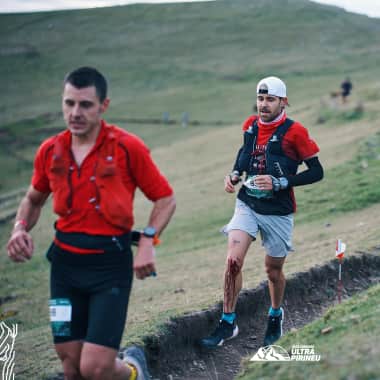
 Bagà
BagàCome and gain some height!
At altitude, it’s not just that “it goes up” 😅. It’s the air getting thinner, passes above 2,000 m, summits taunting you, and the feeling of running on the roof of the continent ⬆️.
An high-altitude race is first and foremost a question of altitude ceiling 🤓. Not a gentle incline with two bumps: routes that flirt with 2,000, 3,000, sometimes 5,000 meters. And up there, everything changes ⛰️. Fun fact: Even at 4,000 m, the air still contains 21% oxygen. What collapses is atmospheric pressure 🫁. So each breath brings you less, your VO2 max drops as you climb, and your flatland pace takes the elevator… down 😂.
The number one playground is the Alps 🏔️. In Chamonix, at the foot of the highest peak in the range, the UTMB hauls its runners up to the Grand Col Ferret, at 2,537 m: the high point of the loop, and the perfect place to understand why you’re breathing so hard 💨. The Mont-Blanc Marathon also plays the vertical card above the valley 📈. Just across the border, the legendary Sierre-Zinal takes you past the 2,400 m mark, with a nickname that hits hard: “The Race of the Five 4,000s”, because you can spot five peaks over 4,000 meters, including the Matterhorn. Still in Switzerland, the Jungfrau Marathon climbs for 42 km to bring you to around 2,100 m, at the foot of the north face of the Eiger. For a first real outing at altitude, this is often where people start: look for mountain running and trail races tailored to your level 💪.
Then come the altitudes that are no joke 🥵. In Colorado, the Pikes Peak Marathon climbs to the summit of Pikes Peak, at 4,302 m: a vertical out-and-back where oxygen becomes a rare commodity 😳. Still in the Rockies, the Leadville 100 is run entirely above 2,800 m 🤯, with Hope Pass perched at 3,840 m. And then there’s the UFO: the Everest Marathon, which starts near base camp, around 5,300 m, the highest marathon in the world 🌍, where just walking is enough to leave you breathless. On the French-speaking side, Réunion and its Grand Raid send you above 2,000 m on the slopes of the intense island. The common thread among these monsters? You don’t run fast there. You run high 😇.
And altitude isn’t only for running: you can climb it out of the saddle too 🚴. The cyclosportives of the Alps have made it their signature. The mythical Marmotte strings together the Glandon, the Télégraphe and the fearsome Galibier pass at 2,642 m, before releasing its survivors at the foot of the 21 bends of Alpe d'Huez. Higher still, the Iseran pass tops out at 2,770 m, the highest paved mountain pass road in the Alps 🛣️, while the Cime de la Bonette flirts with 2,802 m, long presented as the highest asphalt in mainland France 🇫🇷. On the Pyrenees side, the Tourmalet pass and its 2,115 m remain the ultimate judge for any climber worthy of the name 🫡.
High mountain terrain deserves respect too ☝️. The higher you climb, the more acclimatization becomes your best ally: arrive a few days early, ease off the pace, drink, eat, and put your flatland PR back in the closet 😆. Acute mountain sickness doesn’t ask anyone’s permission—headaches, nausea, jelly legs—it shows up for beginners and bib veterans alike. The antidote? Go up gradually and listen to your body 😎. Patience and humility, in short. The mountain has no reason to wait for you. Rest assured: high-altitude races aren’t limited to the exploits of the alien-like athletes of the vertical kilometer and ultra-trail. A big part of the events remain accessible, with short formats designed to taste the peaks without sacrificing your calves 🦵. Want to switch up the scenery? Go take a look at nearby vibes—mountain-side or snow-side ❄️.
Whether you’re aiming for your first summit or your hundredth pass, your next bib is waiting for you up there 😜.
 See all races
Calendar of races
These nice race spots should get your attention






More themes are waiting for you




















A next-gen platform helping sports enthusiasts of all levels discover territories and heritage through races tailored to them.
Made in France, between Lyon and Nantes