
Timed races

Upcoming timed races

 Ústí nad Labem
 Poitiers(86)
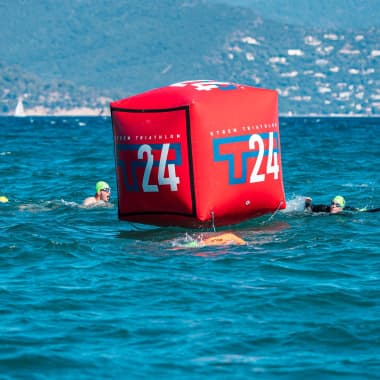 Bormes-les-Mimosas(83)
 Roquevaire(13)
10 a.m., the stopwatch starts and you still don’t know how many kilometers you’ll have swallowed when it stops—only how much time you have left to rack them up 🕦. Welcome to a format that turns every runner’s habits upside down: here, the duration is fixed in advance, the distance is built lap after lap. Strategy, mental management and repeated loops: a deep dive into a format that’s as simple to understand as it is formidable to hold 🔁.
Pick a loop, any loop: 1 km, 5 km, 10 km, whatever. Add a fixed duration: 3h, 6h, 12h, sometimes 24h straight ⏰. The idea of a timed race can be summed up in one sentence: cover that loop as many times as possible before time runs out 😄. No mileage announced at the start, no medal calibrated for a specific distance. Just you, a clock, and a lap count that’s only revealed at the finish 🏁.
This format gave birth to an even more radical variant: Backyard races. Invented in 2011 by the American Lazarus Lake (Gary Cantrell), its principle eliminates rather than times: each runner must complete their loop before the next start signal, or be knocked out ❌. Rest time between loops then becomes the only luxury granted, until only one survivor remains ☝️. American Megan Eckert currently holds the women’s record in the discipline: 583.4 km covered in 87 hours without interruption 🤯.
In a classic timed race, on the other hand, no one is eliminated: everyone manages their own clock 🕰️. This freedom hides a formidable trap, because without a finish line to anticipate, it becomes tempting to start too fast, carried by early-race energy (until the following hours come to collect their due) ⚡️. The real skill here isn’t speed, but the art of dosing your effort when you don’t know where the end is, accepting to slow down long before you’re exhausted 🥱. Organizers, volunteers and spectators stay posted in the same place throughout the race, creating rare closeness: you pass the same encouraging faces every time, lap after lap 🫂.
In Le Faouët, in Morbihan, the 24h Trail de Bretagne keeps competitors moving on a hilly loop of 6 km and 220 mD+ around the Sainte-Barbe chapel, with mandatory night sections on the 6h, 12h and 24h 🕛 formats. Walking becomes the go-to for many competitors at the 24 heures de Villenave d'Ornon, in Gironde : four timed distances coexist on the same loop of 1,100 meters, solo or as a relay. You also have the Trailwalker Oxfam, in Dieppe, which pushes the logic even further by doing away with the notion of solo altogether: teams of four walkers commit together to cover 100 km in under 30 hours, in support of the Oxfam charity 💝.
The atmosphere changes, but the mechanics remain identical on the other side of borders ✈️. The Baku Ultra Endurance, in a public park in the heart of Baku, capital of Azerbaijan, has you running under the lights of the Flame Towers with the Caspian Sea as a backdrop 🌊. In the district of Morges, in Switzerland, the Hybrid Ultra takes up the Backyard mechanics on a 6.7 km loop to be repeated every hour for 24h. The promised reward at the finish: a different Swiss specialty at each recovery hour, between fondue and raclette 🫕. At the gates of the Moroccan Sahara, near M'Hamid El Ghizlane, the 24h du Loup imposes yet another format: 4 km to be covered every hour, for 24h, in complete self-sufficiency, with no notion of ranking 🫣.
One question remains to settle before you sign up: aim for an introductory format of a few hours, just to test the mechanics of the concept without leaving too much leg there, or dive straight into the deep end of the 24h, which generally separates the curious from the committed? 🤔
The Finishers calendar of Backyard races is waiting for you if the “elimination” version of the format intrigues you more than the “everyone runs their own race” version 🤓.
 See all races
Plan your next timed race
- Infinity Trail Backyard Ultra
- 50 Km di Calabria & 8 Ore di Calabria
CuringaRoad Running - 50 km, 8h
- Bouge en Rose
- Urban Trail Chaumont
- T24 Xtreme Triathlon - Bormes-les-Mimosas
- Trail Rose
- Open Fast Hiking The Marseillais Challenge
- Thriller Lake
Dacula(GA)Road Running - 2.2 mi
- Chartreuse Backyard Ultra
- Endurance Backyard 95
 Santa Ana
 Amsterdam
- Almarox
- Chrono Loop of Talant
- Neandertrail of Bruniquel
- Trail of Forts' Challenge at the Fort
- Albigny in Blue
- La Solidaire de Brest
- La Diabolik de Ragnar
- Raid X-Sports Lozère
- Broken Race
- USOL Trail Challenge
- The Raid of the Little Norman Swiss
- Le Défi de l'Olympe
- Trail des 6 heures de la Tonnelle
- The 8h MTB
- Run'insa orange
- Rock n'Trail
- Solidarity Challenge - Wild Run
- Ultra Monplaisir by MJC
- Trail des Dahus Sallanchards
- Hlučínská 24ka
- Mad’Yard
- Trail des Remparts de Carcassonne
- Ultra Montée Thollon les Mémises
- 6 hours of the Lauragais
- Bieg Herosa Maj
KluczeTrail - 9h, 3h, 5 km
- Hightrailer
- Le Grands 8 Ventoux
- No Finish Line Paris
- Le Tour du Coeur 85
- Défi Enfance d'Angers
- Ultra Boucle de la Sarra
- 24h de Peynier
- The Conquerors' Trails
- La Douze Mont-Blanc Passy
- Le Défi de la Vall'Rance
- 24 Hours of INSA
- Versailles Triathlon Festival
- Joué-lès-Tours Childhood Challenge
- Ultrapark Weekend
- Trailwalker Oxfam forêts de Nancy
- Sri Chinmoy Hour Race
SkopjeRoad Running - 1.7 km
- Bol d'Or Vélo Paris
- 10 km d'Embrun
- Alaska Endurance Trail Run
- Le Grand 8 des Pyrénées
- 24 Heures de Roche la Moliere
- Le Trail Champ du Loup
- 24H des Muletiers
- The 6H of Montmeyran
- Leki Ještěd 24 Summer Running Weekend
- T24 Xtreme Triathlon - Ile de Ré
- 8 heures de l'hippodrome
- MDS Crazy Loops Courmayeur
- Spartan Race St.Pölten
Sankt PöltenObstacle Race - 1 km, 3 km, 12h, 5 km, 10 km, 1.5 km, 21 km
- Baku Ultra Endurance
BakuRoad Running - 24h, 6h, 12h
- Relay for the League
- Bieg 12h Mocy
- Team triathlon experience
EupenTriathlon - 10h
- Running Up For Air
- Bol d’Or Vélo – Le Castellet
- 12 heures de Ceyzériat
- Trailwalker Oxfam Dieppe
- 8h Cycling Charade
- 24h Trail de Bretagne
- MDS Crazy Loops La Rosière
- Endurathlon
- Trail des Gets by Rossignol
- La Nuit (Summer Night Run)
- MDS Crazy Loops Morzine Avoriaz
- MDS Crazy Loops Courchevel
- Hybrid Ultra
ApplesRoad Running - 6.7 km
- Méribel Cyclo Challenge
- Trail des Bornes
- MDS Crazy Loops Val d'Isère
- 24 Heures Vélo Škoda
- Les 24 heures de Villenave d'Ornon
- La Vosges Express
- Spartan Race Berlin
BerlinObstacle Race - 5 km, 10 km, 21 km, 4h
- eXtremalny Hour Run
- Backyard des Gaziers
- Atipik Trail
- Les 24 Heures Harmonie Mutuelle d'Albi
- Les 24h du Fer à Cheval
- The Rouillac Backyard
- Le Grand 8 des Citadelles du Vertige
- The One Backyard Ultra
Sidi Ettaïb Bled DendouTrail - 234.5 km, 187.6 km, 6.706 km, 147.4 km
- Iceland Backyard Ultra
ReykjavikTrail - 107.5 km, 6.7 km, 194.9 km, 73.9 km, 47 km, 26.9 km
Where to race against the clock?

















Other running themes are waiting for you


























A next-gen platform helping sports enthusiasts of all levels discover territories and heritage through races tailored to them.
Made in France, between Lyon and Nantes