New York Marathon 2026
- Next event : Sun, November 1, 2026Date confirmed
- Last event : Sun, November 2, 2025

The event in a few words
The TCS New York City Marathon, or simply the New York Marathon 🇺🇸, is an appointment to engrave in your racing calendar in the United States 📅. Every first Sunday of November, the five boroughs of the world’s most famous city turn into one of the biggest stages of grassroots sport on the planet 🗺️. And when we say “big,” we mean it: with more than 50,000 finishers every year, the New York Marathon is quite simply the most-run marathon in the world 🌎. Not the fastest, not the flattest, not the easiest—but the one that brings people together, unites, electrifies, and leaves a lifelong mark on those lucky enough to take part.
To understand what this race represents, you have to go back a bit. It all begins in 1970 in near-total indifference: 127 runners set off to complete several laps in Central Park, in front of a handful of spectators. The winner, Gary Muhrcke, covers the 42.195 km in 2h31'38 ⏱️. A feat for the time, in total anonymity 🧍. Back then, the New York marathon was a small local race, far from the pharaonic image we know today. It was in 1976, under the impetus of race director Fred Lebow and runner George Spitz, that everything changed: the course left the paths of Central Park to cross the city’s five boroughs: the Bronx, Brooklyn, Manhattan, Queens and Staten Island. That turn would be foundational. The marathon exploded—registrations with it—and the race entered legend 📖.
Fred Lebow, by the way, deserves a closer look. This Romanian immigrant, founder of the New York Road Runners and the true soul of the race, gave everything to make the Marathon of New York what it became. He ran the event himself in 1992, at age 60, suffering from brain cancer, accompanied by the great Grete Waitz (nine-time winner in New York), who slowed down so as not to leave his side. He crossed the line in 5h32. Fred passed away two years later, in 1994. His statue now stands at the entrance of Central Park, at the finish 🗿.
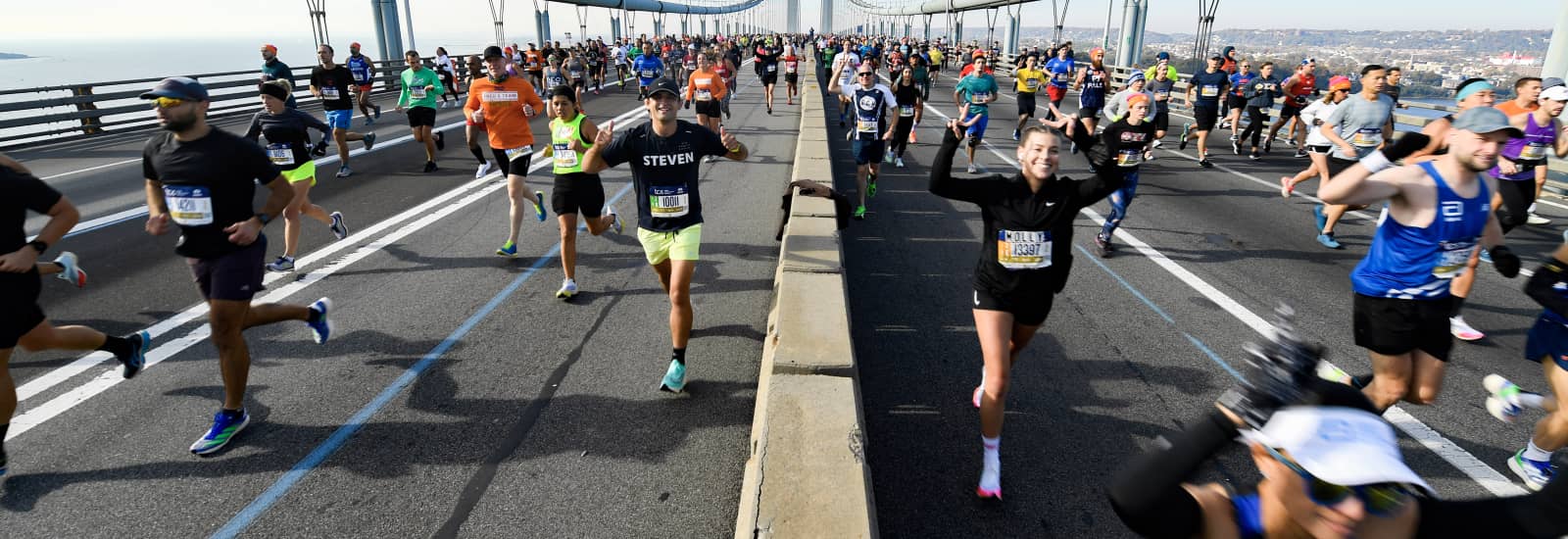
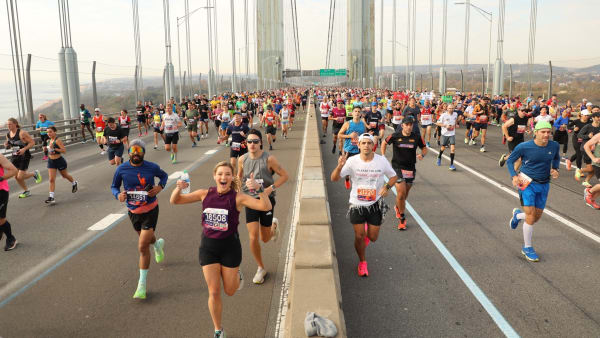
The current course is a true urban epic that starts on Staten Island, on the Verrazano-Narrows Bridge 🌉, one of the largest suspension bridges in the world, and doesn’t stop until Central Park. Runners then cross Brooklyn (kilometers 2 to 13, the most festive part of the race 🎉), head up toward Queens, and cross the Queensboro Bridge in silence: a grueling, almost mystical climb, with no spectators on the bridge itself, before dropping into Manhattan at kilometer 26 🏙️. This moment is known as one of the most intense in the marathon world: the crowd packed along First Avenue screams as runners arrive as if each of them were winning the race. Many say that’s where their legs restart on their own, carried by the wall of sound 📣. You then pass through the Bronx for a short but symbolic detour, before returning to Manhattan, heading back down Fifth Avenue, and diving into the paths of Central Park for the finale 🌳. The finish, always in the park, is one of the most iconic in the running world 🏁.
The total elevation gain is around 400 meters (about 1,300 feet), which makes it a technically demanding course for an urban marathon. The bridges: Verrazano, Pulaski, Queensboro, Willis Avenue, Madison Avenue, are the real difficulties of the route. So many climbs that break your rhythm right when your legs are already negotiating with your brain 🧠. November weather in New York can also play spoilsport: from sunny mildness to biting cold and gusty winds, anything is possible 🌬️. The 2012 edition was even canceled—a very rare occurrence—because of the damage caused by Hurricane Sandy a few days earlier.
The TCS New York City Marathon is part of the very exclusive club of the World Marathon Majors 🏅, alongside Tokyo, Boston, Berlin, Chicago, London and Sydney. These seven races are the Holy Grail for road runners, and New York is the most festive, the most over-the-top, the most New York of them all—that is: excessive in the best sense of the word 😁. Elite winners run for substantial prize money, but what makes New York unique is that the 50,000 everyday participants experience exactly the same race, on the same asphalt, under the same cheers. There’s no VIP pen for legs 🫣.
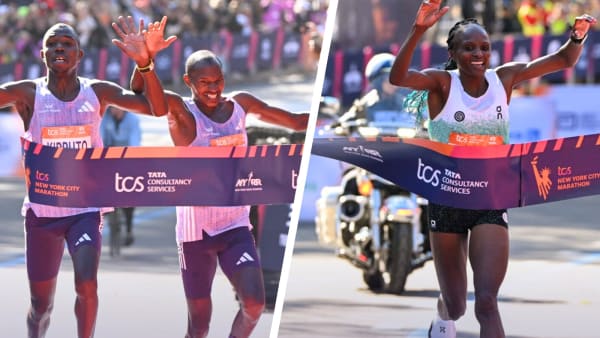
As for records, Ethiopian Tamirat Tola holds the men’s course record with 2h04'58, set in 2023. For women, it’s Kenyan Hellen Obiri who holds the record with 2h19'51, set in 2025. Times that prove the New York course isn’t a speed track, and that the metropolis keeps its secrets well guarded 💎.
To take part, you first have to understand one fundamental thing: spots are scarce, and the path to getting one can take years ⏳. The New York Marathon operates with a lottery system that opens each spring 🎟️. Hundreds of thousands of applications are submitted for a limited number of bibs intended for the general public. The odds of being selected on the first try are relatively low, around 10 to 15% depending on the year. But the system rewards loyalty: each year you’re not selected, you gain an extra chance for the next edition. In other words, the longer you wait, the more your odds increase 📈.
If patience isn’t your cardinal virtue, there are other routes. New York Road Runners (NYRR), the organization that runs the race, offers a program for runners who take part in 9 official NYRR races during the year and complete one day of volunteering: qualification is then guaranteed for the following edition 🏃. A deal that requires investing in the local ecosystem, but has the merit of being fair ⚖️. It’s also possible to go through an official travel operator ✈️, which has an allocation of bibs—in exchange for a package including accommodation and logistics, of course 💁. The race’s partner charities also offer bibs in exchange for committing to a minimum fundraising amount. And finally, runners who have achieved sufficiently fast qualifying times can access a quota of spots reserved for elites... but the standards are high.
Runners are grouped into three separate villages according to their bib colors, and the wait can last several hours before the start 🫡. It’s an experience in itself: thousands of people sitting on golden survival blankets, chatting in fifteen languages, nibbling on cereal bars, and watching the sun rise over New York Bay ☀️. The cannon fires, and a few seconds later, "New York, New York" by Frank Sinatra fills the loudspeakers 🔊. That moment—no runner ever forgets it.
All along the course, the atmosphere is downright incredible 🎉. Residents of all five boroughs turn out in force, some in costume, others with handmade signs bearing runners’ names (put your first name on your shirt—seriously: you’ll understand why at kilometer 30 when you need it). In Brooklyn, speakers blast hip-hop and gospel 🎼, gospel groups sing on church stoops, and family barbecues fire up early in the morning 🎷. It’s disorienting, joyful, improbable. You’ll long remember the crush of the crowd as you enter Manhattan just after the Queensboro Bridge 🌁. You’ll remember heading back down Fifth Avenue, the biting cold, the last kilometers where every turn seems like the last—and never quite is... 😩
If you cross the finish line of the New York Marathon 🏁, don’t forget to buy The New York Times 🗞️ the next morning. You’ll have the pride of seeing your name and your time printed in black and white in the special section dedicated to the race. In the city that never sleeps, you’ll have left a mark. A wonderful souvenir ❤️.
The distance you'll all agree on
MarathonTOP
- Sunday, November 1, 2026
- Elevation gain : 400mD+
- 1 loopx26.22 mi ≈ 42.195 km

Hotels near the race
More info on this race


A next-gen platform helping sports enthusiasts of all levels discover territories and heritage through races tailored to them.
Made in France, between Lyon and Nantes