
Playful races

Upcoming playful races
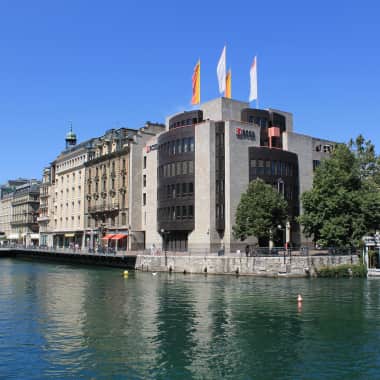


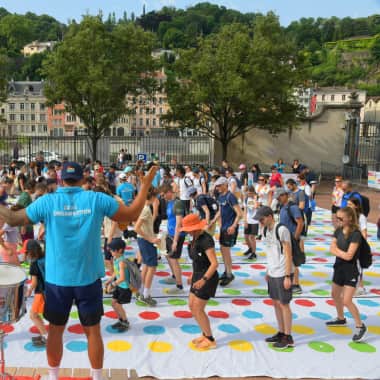
Before you read the rules of the game, know one thing: here, the finish line is never the only objective 🏁. Riddles to solve along the way, unlikely bike-run relays, timed challenges with a fixed duration rather than a fixed distance: each playful race invents its own rules, different from one event to the next. Head to the full guide, before choosing your next game 🎲.
A race, in theory, only needs one rule: go as fast as possible from point A to point B 🗺️. A playful race rejects that simplicity and always adds at least a second rule, often brand new from one edition to the next: solve a riddle along the way, share a single bike between two people, run laps for a fixed amount of time without knowing your final distance in advance 📋. The final ranking then matters far less than understanding the principle imposed by the organizers 🤓. This kind of format also draws a very broad audience, from the runner curious to try an original concept to the occasional participant mainly looking to have a great time with friends 👯♂️.
In a classic race, the question is always the same: how long does it take to cover X kilometers ? 🤔 A playful race flips the question: how many laps, obstacles, or stages can you complete within a given framework, often a fixed time or a game rule to follow? 🫡 This shift completely changes the participant’s mindset, who approaches the event like a game to play rather than a time to beat. The real talent here isn’t just running fast—it’s understanding the rules of the game faster than the person next to you on the starting line ⚡️.
Behind every playful race there is generally a staging planned in advance: a medieval fortress theme, riddles scattered along the route, team activities between two running segments 🎰. Nothing is left to chance, even when the atmosphere seems totally improvised 😄. This narrative dimension clearly sets the playful race apart from a simple fun run: here, the concept truly structures the experience, from the first to the last kilometer 🏃♀️. The organizers themselves often get into the spirit of it, slipping surprises in all along the course, like a real-life treasure hunt 🏴☠️.
In Elven, in Morbihan, the 4-Hour Challenge & Strides of the Largoët Fortress offers continuous laps around a medieval fortress for four hours, alongside more classic 1 and 12 km formats, in a setting steeped in Breton history 📚. In Agen, the Bike and Run Family reinvents duo racing: one bike for two teammates, who must share it over 5 km by alternating running and pedaling, which requires real improvised tandem coordination 🚴. In Lyon, Re Lyon Nous plays the pun card all the way to its name, with a multisport format over 6 or 11 km that mixes several disciplines along a single course 😲.
The game continues across borders, with its own local variations 📍. In the United States, the Time Travel Half-Marathon, in Grand Rapids in Michigan, takes the concept as far as its name: a half-marathon that plays with local time zones on the day the clocks change, deliberately blurring everyone’s bearings 😵💫. In the United Kingdom, in York, the PuzzleRun literally turns its 10 km trail into a giant scavenger hunt, with clues to solve along the way to move on to the next stage ✅. In Switzerland, in Geneva, the Eau'Rizon plays on words as much as on environmental commitment, untimed, in the heart of the city 🏙️.
There’s only one real question left to settle before confirming your registration: do you prefer a riddle game, a timed challenge with a fixed duration, or a duo adventure in Bike and Run style? ⭐️ Each of these formats imposes its own way of approaching the effort—between strategy, coordination, and completely letting go of the very notion of performance 🤭. The Finishers calendar of team races naturally extends the experience for those who like to play collectively all the way to the end.
 See all races
Playful races calendar
 Guarda
- Bike & Run of Saint-Crépin-Ibouvillers
Saint-Crépin-Ibouvillers(60)Bike and Run, Road Running & Walking - 18 km, 1.5 km, 4 km, 6 km, 11 km, 10 km
- Evry-courcouronnes trail urbain
- Asso'Run 2026
- Puzzlerun
YorkTrail - 10 km
- LOSC Solidarity Run
- La Frappadingue - Trélissac
- Anjou Swimrun
- Road to Lyon - Hyrox
- SMV Challenge Cross Training
- Défi 4 heures & Foulées de la forteresse de Largoët
- Xtrem country race
- Les Foulées Vitteloises
- EKO Run with a Whistle for Health
JerzmanowiceRoad Running - 8 km
- Re Lyon Nous
- Red Hyrox Sprint
- Athletic Challenge
- Fitex ERGS Series
- Color Run d'Abbeville
- The Lake Antoine Classic
Iron Mountain(MI)Trail - 3.11 mi, 9.32 mi, 5 mi, 2 mi
- New Glarus Woods State Park Trail Run
- Warendorfer Emssee-Volkslauf
WarendorfRoad Running - 21.0975 km, 10 km, 5 km
- Time Travel Half-Marathon - Grand Rapids
- The Mars Planet Trail
- Bridgwater Half Marathon
- Tupelo Marathon & 14.2 Miler
- Volkslauf Rund um Weitersburg
- The Whiskey Run - Atlanta
- Kiel.Lauf powered by Förde Sparkasse
- Le Trail Arengossais
- Hyrox Challenge - Be Sport Be Free
Where to experience your playful adventure?

















More themes are waiting for you














A next-gen platform helping sports enthusiasts of all levels discover territories and heritage through races tailored to them.
Made in France, between Lyon and Nantes