London Marathon 2027
- Next event : Sun, April 25, 2027Date confirmed
- Last event : Sun, April 26, 2026

The event in a few words
London, regarded as the most iconic global city internationally, with a colossal impact on the arts 🎨, commerce, education, fashion and tourism, has to be up to scratch when it comes to running 😎. And it didn’t wait for Finishers to prove it: the London Marathon is one of the most famous marathons in the world 🌍, with an official classification among the 8 intercontinental World Marathons Majors. Created in 1981 by former Olympic champion Chris Brasher, the event has seen the best athletes in the world take part. More than just an endurance race, it’s a true people’s celebration that’s carried on year after year 🎉.
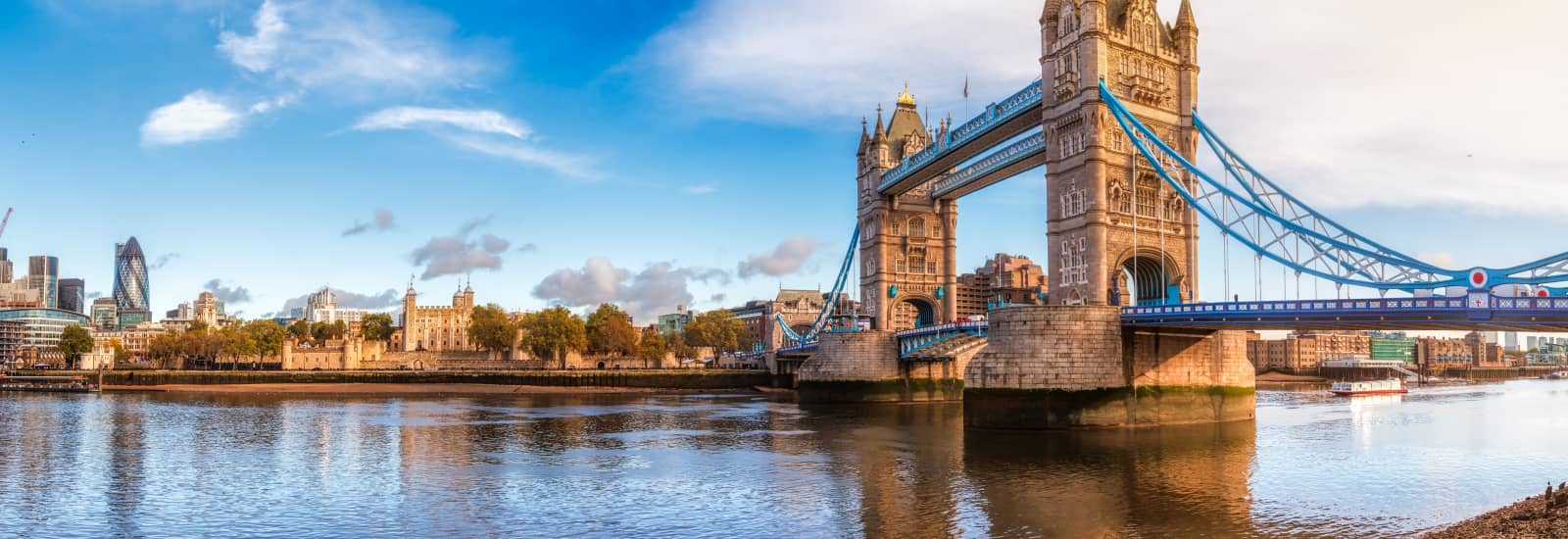
Inspired by the prestige and reputation of the New York City Marathon, the London Marathon (or TCS London Marathon, its real name 😎), in the United Kingdom 🇬🇧, was a huge success from the very first years 💪. The route isn’t just a simple loop where you only need to move your legs in rhythm; it’s a real journey through time and Anglophone culture, in the country’s capital 🏴. The start is given in the southeast of the city, near Greenwich Park. Yes, yes, like the meridian 🌐. That’s when you realize we’re not talking about the little public garden around the corner, but a true monument that gave its name to one of the most famous geographical terms in the world 😅. And that’s nothing compared to what comes next: at km 10, you might cross paths with the Cutty Stark, the emblematic statue of the National Maritime Museum ⛵️. But no way you’re getting on board—only a quarter of the route has been done 🤪. After 20 km, you’ll have to change banks, and for the occasion it’s Tower Bridge that will serve as the crossing 🌉. This unusual, medieval bridge watches peacefully over the city. But it’s not over: the London Tower, St Paul’s Cathedral, St James’s Park and the final straight up to Buckingham Palace are each reasons in their own right to head to London in April for a wild race 🏃. All of it driven and cheered on by a London crowd present at every meter of the course 📣.
The greatest runners in the world have been through here and several world records have fallen here. At the same time, the profile is ultra-flat, with no elevation gain, and perfect for focusing on pace 💨. Kenyan athletes regularly battle it out for the title 🇰🇪, like Martin Lel, Eliud Kipchoge, Amos Kipruto, Kelvin Kiptum or Sabastian Sawe. The event records keep falling one after another, and it’s Sabastian Sawe who has held the best time since 2026, in 1 hour 59 minutes and 30 seconds 🏆. On the women’s side, a famous Brit by the name of Paula Radcliffe set a world record in 2003, which lasted for more than 16 years 🤯. In 2026, Tigist Assefa also set a new marathon world record in a women-only race by winning in 2h15'41'' 🏆. But beyond the stratospheric performances delivered by international runners, the London Marathon has a track record of its own ✅. It’s the running event that raises the most money in the world for charities 💸. So not only can you perform there, but you also contribute to one of the biggest global solidarity fundraisers 🫂. In total, more than one billion euros have been raised by the organizers. If that isn’t the most impressive of all the numbers mentioned, it’s still the most deserving 🫶.
Once the race is over, a whole world of possibilities opens up to participants: the banks of the Thames 🐟, guided tours of the many historic monuments you discovered earlier, Big Ben, the royal guard… 💂 And if you’re a lover of London music, you can also head to Waterloo Station to "watch the sunset and feel like you’re in paradise" 🎸.
Don’t forget to come back from the area with souvenirs and keychains filling your pockets, because once you’re back home 🧳, you’ll probably feel homesick and you’ll pray for someone to "take me back to London" 🛬.
The distance you'll all agree on
MarathonTOP
Kids
- Sunday, April 25, 2027
- Elevation gain : 81mD+
- 1 loopx42.195 km

Hotels near the race
More info on this race


A next-gen platform helping sports enthusiasts of all levels discover territories and heritage through races tailored to them.
Made in France, between Lyon and Nantes