
Ultra backyard 1300 2027
- Next event : Sat, June 19, 2027Date confirmed

The event in a few words
Villar or Villard? Even the local signs hesitate over the final d 🤔. Don't worry, the only D that will matter here is the D+ 😉. At the gates of Briançon, in the Hautes-Alpes, the village of Villar-Saint-Pancrace hosts the Ultra Backyard 1300 at the foot of its mountain center, set at 1,300 m of altitude, the number you find in the name of the race 🏔️. See you in mid-June, when the Briançonnais usually shows off its finest blue sky 🌤️. The mountain does keep a little thunderstorm in reserve for those overly heavy late afternoons ⛈️. At night, the altitude takes back its rights: the rules themselves warn that June nights remain cool at this height, so your fleece will be waiting patiently for you in the camp zone 🧥.
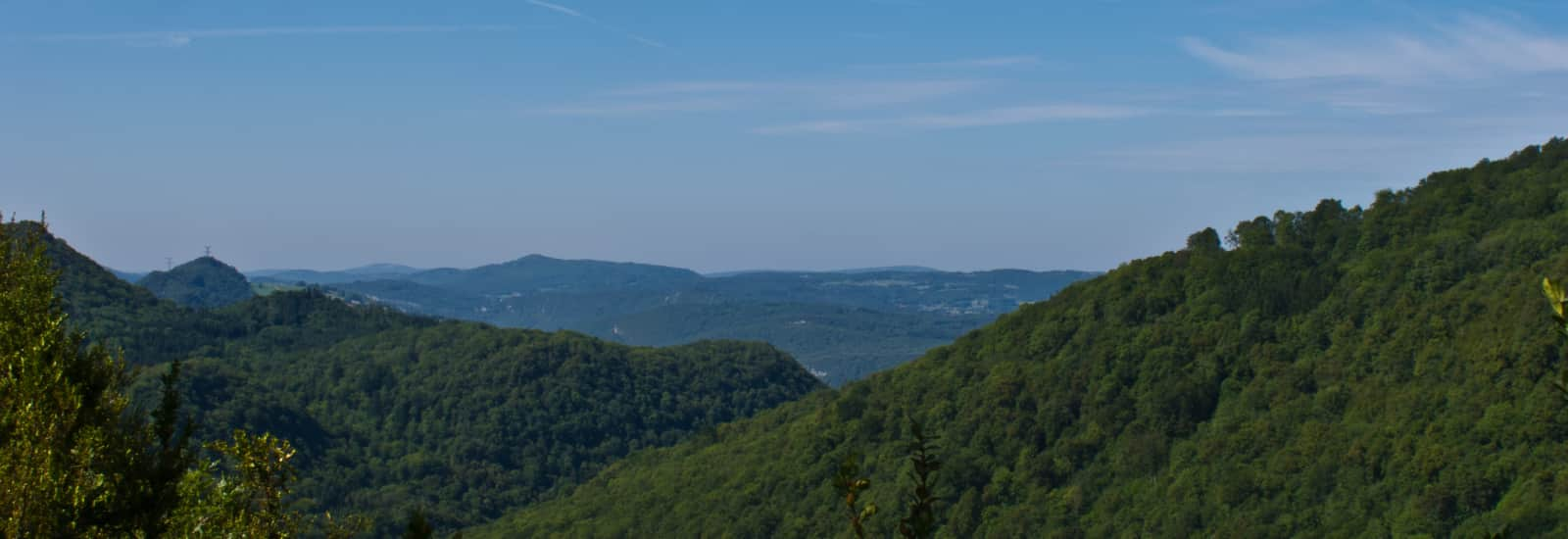
The principle is a 5.7 km loop with about 100 mD+, to be completed in under an hour before getting back to the corral and setting off again at the next bell 🔁. The course leaves the mountain center, runs along the edge of the forest on the mountain slope and winds between firs and larches 🌲. Along the way, you will cross a stream, run alongside open fields and keep the peaks of the Briançonnais in your field of view. The profile remains runnable, with just enough kicks to make your thighs keep count of the laps 📈. Day or night, the course does not change by a single meter, marked with reflective tape that will glitter under your headlamp 🔦. A little detail for the math lovers: 5.7 km and 100 mD+ give 6.7 km-effort according to the FFA calculation, which is almost the distance of the legendary loop of Big’s Backyard Ultra, in Tennessee 🇺🇸. A coincidence of the calculation or a deliberate nod? 🧐 We'll let you ask the organizer between two loops.
Here, there is no clock to beat in the traditional sense: all that counts is the number of loops completed on time ⏱️. All formats set off at the same bell and everyone stops at their quota. One loop to taste the concept, three for a long run, six for a discovery trail distance, twelve solo or in a relay for two 🤝. That leaves the Ultra, the real backyard with no time limit, where only the last runner standing wins, and where the runner-up leaves with the honorary title of assist 🍫. On the organizational side, the Ultra Backyard 1300 relies on well-oiled mechanics: three signals before each start, an RFID chip in the bib to record each lap, and a first aid post at base camp 📡. The race is experienced in semi-self-sufficiency, with a personal cup in your pocket and zero disposable cups on site 🌱. The organizer sums it up in one idea: competition takes a back seat, and kindness gives the format its spice. There is no kids' race on the program; the shortest loop opens from the cadet category.
Between two laps, keep an eye on the facades of the old village: Villar-Saint-Pancrace has a collection of sundials, including one dated 1773 and another painted in 1821 on the facade of the Saint-Pancrace church ⏳. For a format where everything is played out on the hour, it's hard to dream of a better neighbor. The village also preserves the memory of its coal mines, operated from the 18th century until 1960, whose rails and mine carts remain along the sentier des Mineurs (Miners' Trail), starting from the mountain center ⛏️. You too will go to the coal face, one hour after another. The next day, head to the Vauban city of Briançon and its fortifications listed as UNESCO World Heritage 🏰, or the Col de l’Izoard, a legendary playground of the Tour de France 🚴. At the table, Hautes-Alpes tourtons will put energy back into your legs, and a little glass of génépi will celebrate your number of loops, in moderation 🥃. Still hungry for elevation? The trails in the Hautes-Alpes and the Névache - Val des Prés - Briançon half marathon are waiting for you in the area.
On the sundial of the village school, a motto states that “the sun still turns”. Here, you will turn too, as long as the bell rings 🔔.
4 reasons to join this race
A word from the organizer:
"The backyard is a unique format, everyone finds something in it. It's an opportunity for everyone to push their limits. It's also a unique atmosphere, competition is secondary, kindness makes the format special. And what could be better than doing it in such a prestigious place, in the heart of the giants of the Alps."
A distance for every taste
5.7 kmTOP
17.5 km
35.1 km
70.2 km
171 km
- Saturday, June 19, 2027
- Elevation gain : 100mD+
- 1 loopx5.7 km
A few more words
Start from the corral at the mountain center, at 1,300 m elevation, for a single loop of 5.7 km and 100 m D+. The route runs along the mountainside next to the forest, passes through undergrowth of fir and larch trees, crosses a stream, then follows fields with views of the Briançonnais 💧. The rolling profile suits both running and active walking: with an hour ahead of you, you'll tackle the small bumps without fearing the bell 🚶. Back at the corral to validate your lap and discover from the inside this quirky format that gets you hooked 👟.

17.5 km : Backyard 3 Loops
Trail- Saturday, June 19, 2027
- Elevation gain : 300mD+
- 3 loopsx5.8333 km
A few more words
Three laps, 17.1 km and 300 mD+ in total, to learn the true grammar of the backyard 🔋. The first loop is for scouting, the second for finding your rhythm, the third for validation. Between two starts, the time you've gained is yours: a stop at the base camp aid station, a sip from your cup, a stretch, and already the signals sound 🍌. You'll end up knowing every root and every bend of the trail, so you can manage your effort down to the meter.
35.1 km : Backyard 6 loops
Trail- Saturday, June 19, 2027
- Elevation gain : 600mD+
- 6 loopsx5.85 km
A few more words
Six hours, 34.2 km and 600 mD+: your entry into long distance, mountain edition 🧭. The first loops go by quickly, and pacing really comes into play from the halfway point, when the repeated surges start to weigh on your legs. Your personal aid station, set up in the camp area, becomes your best ally between laps 🍝. Poles remain allowed to ease the climbs. Once you cross the last bell in time, you'll leave with the finisher status.
70.2 km : Backyard 12 Loops Solo
Trail- Saturday, June 19, 2027
- Elevation gain : 1200mD+
- 12 loopsx5.85 km
A few more words
Twelve hours, 68.4 km and 1,200 m D+ to step into solo ultra running. Daylight will gradually give way to dusk on the peaks of the Briançonnais 🌆, and the last loops will be run by headlamp, windbreaker on your back, guided by the reflective flagging tape ⭐. The body tires, the mind takes over: keeping up the pace lap after lap without burning through your reserves becomes the whole challenge. A special feature of the rules: the fastest time on the 12th loop determines the winner among the finishers, turning the last lap into a real final sprint 🏁.
70.2 km : Backyard 12 Loops Duo
Trail- Saturday, June 19, 2027
- Elevation gain : 1200mD+
- 12 loopsx5.85 km
A few more words
Same format as the 12-B, 68.4 km and 1,200 mD+, to share with a teammate in a duo. Only one of you runs each loop while the other recovers at camp, and the handover takes place in the corral, at the sound of the bell 🔄. No running order is imposed: you can alternate sensibly or let one of you run several laps in a row while the other takes a nap, provided that each of you completes at least one lap. The strategy is decided live, loop by loop, and the 12th remains the moment of truth for the final time 🧠.
171 km : Backyard Ultra
Trail- Saturday, June 19, 2027
- Elevation gain : 3000mD+
- 30 loopsx5.7 km
A few more words
The king of formats, where nobody knows the distance in advance. A 5.7 km loop every hour, over and over, as long as you show up at the corral when the bell rings 🦉. The afternoon will give way to the cool high-altitude night, then to dawn over the Briançonnais for those who last that long 🌅. Sleep is negotiated in minutes, food in bites, and the race is won as much in the camp zone as on the trail. Only the last runner to complete a solo lap within the hour will win the most unpredictable ultra-trail in the Hautes-Alpes, in a timed race and night race version 🏆.
Frequently asked questions (FAQ)
Bib pick-up takes place at the Villar-Saint-Pancrace mountain center (impasse de l’Orée du Bois, 05100 Villar-Saint-Pancrace), upon presentation of an ID:
on Friday, June 18, 2027 from 5 p.m. to 7 p.m.;
on Saturday, June 19, 2027 from 9 a.m. to 12 p.m.
The health document must be provided before bib pick-up.
All formats start together on Saturday, June 19, 2027 at 12 p.m., from the corral set up at the Villar-Saint-Pancrace mountain center. A mandatory briefing takes place in the corral at 11:45 a.m. A new loop then starts every hour, on the hour, at the sound of the bell. Three signals are given three minutes, two minutes and one minute before each start.
Before bib pick-up, each runner must provide either an FFA license valid on the day of the race, or a PPS (Parcours Prévention Santé) certificate dated less than three months before the event.
Age limits follow FFA regulations, according to the 2027 season categories:
01-B: from the cadet category (16 years old, born in 2011 or earlier), with parental authorization for minors;
03-B: from the junior category (18 years old, born in 2009 or earlier), with parental authorization for minors;
06-B, 12-B, 12-B DUO and Ultra: from the espoir category (20 years old, born in 2007 or earlier).
2027 info coming soon. Registration opens on Friday, November 6, 2026 and closes on Thursday, June 17, 2027, or earlier if the maximum number of participants is reached. No refunds are granted, whatever the reason for cancellation. A bib exchange allows you to transfer your bib following the official procedure, and a change of format remains possible until Friday, June 18, 2027, with payment of the price difference.
Yes, on every loop. Each runner has one hour to complete the loop and cross the line before the next start. A loop finished after the bell is not counted and results in elimination. A runner who is absent from the corral when the bell rings is also eliminated.
A solid and liquid aid station is set up at the base camp, in the finish area. No aid is offered on the loop. Each runner can set up their own supplies in the camp zone provided for this purpose. The race is run in semi-self-sufficiency: a personal cup is mandatory and no disposable cups are distributed.
Each runner carries on them, on every loop:
a personal cup;
a charged phone, with the organization's number saved.
From 9 p.m. to 6 a.m., they must also carry:
a working headlamp;
a windproof jacket.
Each runner also keeps a spare light and a warm layer at camp. Checks may take place at the corral, and a runner without their mandatory gear will not start the loop. Poles are allowed.
A camp zone is provided at the base camp site to set up your belongings and personal supplies. Assistance is allowed there. The organization declines all responsibility in case of theft or loss of equipment at camp. 2027 info on showers and changing rooms is coming soon.
If you have any remaining questions, you can contact the organizers by email: contact@dossardclub.fr
You can check the race rules here
A next-gen platform helping sports enthusiasts of all levels discover territories and heritage through races tailored to them.
Made in France, between Lyon and Nantes