
Gravel Running, Trail Running, Running: what are the differences? The complete guide to stop mixing them up
You’ve already had this conversation. Someone asks you what sport you do, you answer "I run," and then it starts: "Trail? Running? What exactly is this gravel running everyone’s talking about?" And you stammer something vague while looking at your shoes. We’ve all been there. This article is the end of that conversation.
The world of running has expanded considerably over the last ten years. Between road running , trail running, gravel running, ultra-trail, skyrunning, the vertical kilometer and mountain running, it’s hard to find your way without a little survival guide. Especially when brands throw new words on their shoe boxes every season. So here it is: we untangle all of it, discipline by discipline, terrain by terrain. With the right French and global regions to practice each discipline, because terrain is still the main thing.
Road running: the starting point of it all
Let’s start with the basics. Road running, or road running, is the mother discipline. The one the vast majority of runners begin with, and for a very good reason: it’s accessible everywhere, right away, with no special equipment. A pair of running shoes, a sidewalk, and off you go. No need for a GPS, trail gaiters, or a fueling plan.
The official formats recognized by World Athletics (the international governing body) are clearly defined: 5K, 10K, the half marathon (21.097 km), the marathon (42.195 km), 50 km, 100 km, and time-based races (6h, 12h, 24h). On this terrain, times are comparable from one race to another because conditions are standardized: asphalt, flat or gently rolling profile, split times at key kilometers.
Road running is also the basic training for all trail runners. Even the best mountain runners do a good portion of their mileage on the flat, because it allows them to work on aerobic base, stride consistency, and recovery without overloading the joints. Road running is the foundation. Not the summit 🏙️.
Where to run on the road in France and around the world? The big city marathons are the unmissable meetups: Paris, Berlin, New York, Tokyo, Sydney, London, Chicago, Boston 🏙️. Thousands of runners, certified times, a festive crowd atmosphere. That’s road running at its finest ✨.

(Run4FFWPU)
Trail running: when nature takes over
Now we’re changing worlds. Trail running, or simply trail , is a running discipline that takes place in a natural environment, on trails, paths, and varied terrain. The ITRA (International Trail Running Association), founded in 2013 and recognized by World Athletics since 2015, provides the official definition: a running course open to everyone, in a natural environment, with a maximum of 20% of the course on paved roads.
The big difference from road running is the terrain. In trail, you run on dirt, rock, mud, snow, roots, wet grass and sometimes along ridges where it’s better not to look over the side for too long. Climbs are steep, descents are technical, and your ankles have very strong opinions about all of it 🏔️.
To measure a trail’s real difficulty, ITRA uses the concept of the effort kilometer (km-effort): you add the distance in kilometers and the positive elevation gain divided by 100. A 40 km trail with 2,000 m of D+ therefore represents 60 km-effort, far more demanding than a flat 40 km. This formula is what makes it possible to classify races into seven categories, from XXS (less than 24 km-effort, perfect for getting started) to XXL (more than 210 km-effort, for those who’ve given up on sleep and cartilage). In between, XS, S, M, L, and XL cover every runner profile.
Trail is also a philosophy. ITRA emphasizes four fundamental values: ethics, fairness, solidarity, and environmental preservation. Basically: don’t leave trash on the trail, help a runner in trouble even if it costs you a few minutes, and respect the mountains. It’s not just a sport; it’s a way of behaving outdoors ♻️.
The major trail regions in France: The Alps (with the UTMB in Chamonix), the Pyrenees (the Euskal Trail, the Grand Raid des Pyrénées), the Massif Central (the SaintéLyon, the Festival des Templiers in the Gorges du Tarn), the Vosges, the Jura, Brittany with its spectacular coastal trails, and Provence with its limestone reliefs and scents of garrigue. Each region has its character, its terrain, its vibe.
And around the world? The Dolomites in Italy (Lavaredo Ultra Trail, Tor X), Chilean Patagonia (Patagonian International Marathon), the Scottish Highlands, the Atlas Mountains of Morocco (Marathon des Sables), New Zealand (Tarawera Ultra), South Africa (Ultra-Trail Cape Town on Table Mountain)... Trail running has gone global at an impressive pace. Today, races are held in more than 100 countries 🌍.

(Cristian Camilo Estrada)
Gravel running: the rising newcomer
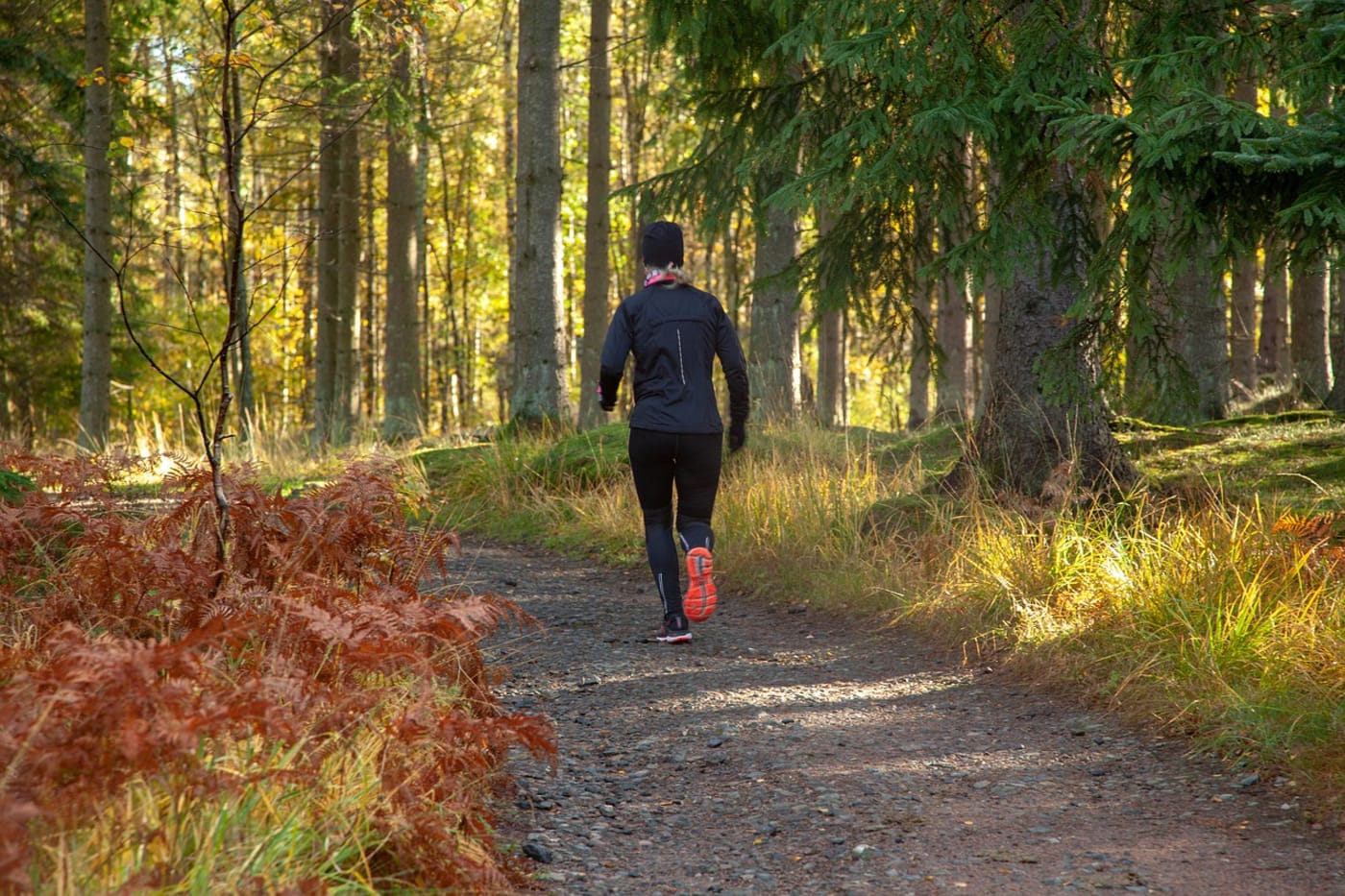
And now we get to the topic everyone’s talking about. Gravel running is the newest discipline of the trio, and it comes straight from the cycling world. The gravel bike , this hybrid bike designed to alternate between paved roads and unpaved paths, paved the way for a philosophy of freedom and versatility. Runners followed the movement. The term "gravel" comes from English and literally means "gravel", and that sums up the spirit pretty well. Concretely, gravel running is practiced on unpaved but runnable terrain: forest tracks, farm roads, greenways, gravel paths... The key word is “runnable.” No technical rocks, no brutal elevation, no roots waiting for you to look away so they can trip you up ❌. You leave the asphalt, but without taking on the committed terrain of trail running. It’s the best of both worlds combined into a single outing 😁.
What sets gravel running apart from trail is above all the level of technical commitment. In trail, the terrain can be rocky, steep, with sections that require focus and solid downhill technique. In gravel running, surfaces are less technical, slopes are moderate, your stride stays smooth and the pace steady. No need to be a technician to get started. That’s actually one of the discipline’s big draws: it’s accessible to road runners who want to discover nature without jumping straight into the deep end of trail running.
Where to do gravel running in France and around the world? The huge advantage of gravel running is that it doesn’t require getting far from home. In France: the greenways of Burgundy (the Canal de Bourgogne cycle route, for example), the hiking paths of the Gers and Gascony, the forest tracks of the Landes, the banks of the Loire, the vineyard paths around Bordeaux, Champagne, or the Luberon, cycle paths converted into running routes in the Ardennes or French Flanders. Internationally: the great white roads of Tuscany (an ideal setting for a vineyard trail), the tracks of the Alentejo in Portugal, the dirt roads of New England in the United States. Anywhere there’s a dirt track and some curiosity 🌾.
And the other disciplines? A quick overview
The world of off-road running doesn’t stop at these three disciplines. There are other practices worth knowing about.
Skyrunning takes place above 2,000 meters of altitude, on very technical high-mountain terrain. Vertical kilometer races involve 1,000 meters of positive elevation gain over a maximum distance of 4 km. It’s vertical, brutal, and spectacular 🤪.
Mountain running is a federation discipline overseen by the FFA (French Athletics Federation). It requires a minimum of 500 meters of positive elevation gain and is run without a hydration pack, over formats shorter than trail. It has its own European and World championships.
Ultra-trail is simply trail that goes beyond the marathon distance (42.195 km). Beyond that, you enter another dimension: sleep management, nutrition strategy over dozens of hours, crew support (assistance team). Major events like the UTMB (170 km around Mont Blanc), the Diagonale des Fous (170 km on Réunion Island), the Tor X (330 km in the Aosta Valley), or the Hardrock 100 (161 km in the United States) represent the elite of the ultra discipline 🌋.

(Zout Fotografie)
Which discipline is right for you?
The honest answer: it depends on who you are, what you’re looking for, and where you live. If you live in the city and you want to run regularly with minimal logistics, road running remains the most efficient and practical. If you’re drawn to nature, wide-open spaces, and intense physical challenges, trail running is your discipline. Start with a short format (XS or XXS according to the ITRA classification) before aiming for the big formats. And if you’re somewhere in between, you’re fed up with asphalt but you don’t want to completely change your gear and your world, gravel running is made for you 🫵. It’s the ideal gateway to nature, without the technical staircase of trail 🚪.
The best option? Try all three. Many runners do road running during the week for training, gravel on the weekend to get away, and trail in competition for the challenge. The disciplines complement each other, feed each other, and make you a complete, versatile runner 💪.
This could also be of interest to you







A next-gen platform helping sports enthusiasts of all levels discover territories and heritage through races tailored to them.
Made in France, between Lyon and Nantes