
Races in Molise

Upcoming races in Molise
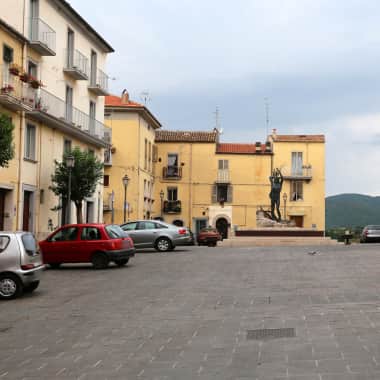

Authentic nature and centuries-old traditions
Italy’s most overlooked region—the one everyone swears doesn’t exist. Mountains, old transhumance paths, and a small window onto the Adriatic🐑
There’s a joke going around Italy: Molise doesn’t exist. This tiny territory in the central-south is so discreet, so rarely visited by tourists, that Italians have turned it into a national meme. And yet Molise is very real—Italy’s second-smallest region after the Aosta Valley—split off from the Abruzzo only in 1963, making it the youngest of Italy 🇮🇹. Campobasso is its hilltop capital, and Isernia the other hub, set on foundations that date back to Antiquity. Between the two, villages clinging to the hillsides—often half-empty—lie in a silence that few places still offer.
The landscape is, first and foremost, a matter of mountains. The Samnite Apennines cover most of the region, with green ridges, beech forests, and high plateaus swept by winds 🏔️. This was the heart of Samnium, the warrior people who stood up to Rome for centuries, and whose theater at Pietrabbondante still towers over the valleys. Then, to the far east, Molise offers a short frontage on the Adriatic around Termoli, a colorful port from which boats depart for the Tremiti Islands. Between mountain and sea wind the tratturi—these wide transhumance tracks traced by shepherds since Antiquity—green highways for livestock that have become an ideal playground for runners 🐑.
The climate follows altitude, as is often the case in the Apennines. The higher elevations stay cool and are sometimes snow-covered in winter, which keeps mountain trails best for spring and summer. The short coast around Termoli, meanwhile, enjoys a milder Mediterranean climate, runnable for a good part of the year 🌊. Autumn turns the beech woods golden and scents the markets with truffles, one of the area’s discreet treasures. Everywhere, the low population density makes Molise a rare terrain: here you’ll meet more sheep than runners, and that’s precisely its charm.
The race calendar in Molise is only taking its first strides, but the opening is full of heart. The CorrIsernia livens up the streets of Isernia in early October—a nine-kilometer charity run that brings the city together around a good cause 🏘️. It’s still a small offering, but the region has everything needed to host trail running: its tratturi, its Samnite summits, and its forests are just waiting for bib numbers. While trail running in the region develops, the neighbors offer plenty to think big: Abruzzo extends the Apennines northward with the Gran Sasso, Apulia unfurls its heel to the east, and Campania opens onto the Bay of Naples to the southwest. Molise, for its part, is best savored as a secret stop between two more popular lands.
After a race in Molise, the table makes up for everything—starting with the teasing. Hand-rolled cavatelli come with a generous sauce, caciocavallo ages its rind in cellars, and ventricina—a chili-spiced sausage—wakes up numbed taste buds 🌶️. A glass of Tintilia, this native red grape variety that grows almost only here, accompanies the meal (Alcohol abuse is dangerous for your health; consume in moderation). On the heritage side, Molise hides a gem: in Agnone, the Marinelli foundry has been casting bells for nearly a thousand years, a supplier to the Vatican and among the oldest family businesses in the world 🔔. The real sporting tradition comes from the transhumant shepherds, who walked the tratturi for hundreds of kilometers—trail runners without knowing it, long before the word was invented. So, ready to prove Molise exists, bib in hand? Explore the local road races and trail runs—Italy’s most secret region is waiting for you 👟.
 See all races
Race calendar in Molise
You might also be interested in these great race spots

Other places are waiting for you




A next-gen platform helping sports enthusiasts of all levels discover territories and heritage through races tailored to them.
Made in France, between Lyon and Nantes